

While model collectors have long hoped that heavyweights like LCD Models or MotorHelix would tackle the iconic Japanese supercar in full die-cast metal, LCD Models has finally delivered. Following the benchmark set by their exceptional Toyota Supra (A80), expectations for the 1:18 Honda NSX were exceptionally high. Having unboxed and closely evaluated the Championship White release, it is safe to say LCD does not disappoint.
Below is a detailed breakdown of how LCD’s die-cast interpretation holds up, including a direct comparison against AUTOart’s composite release.
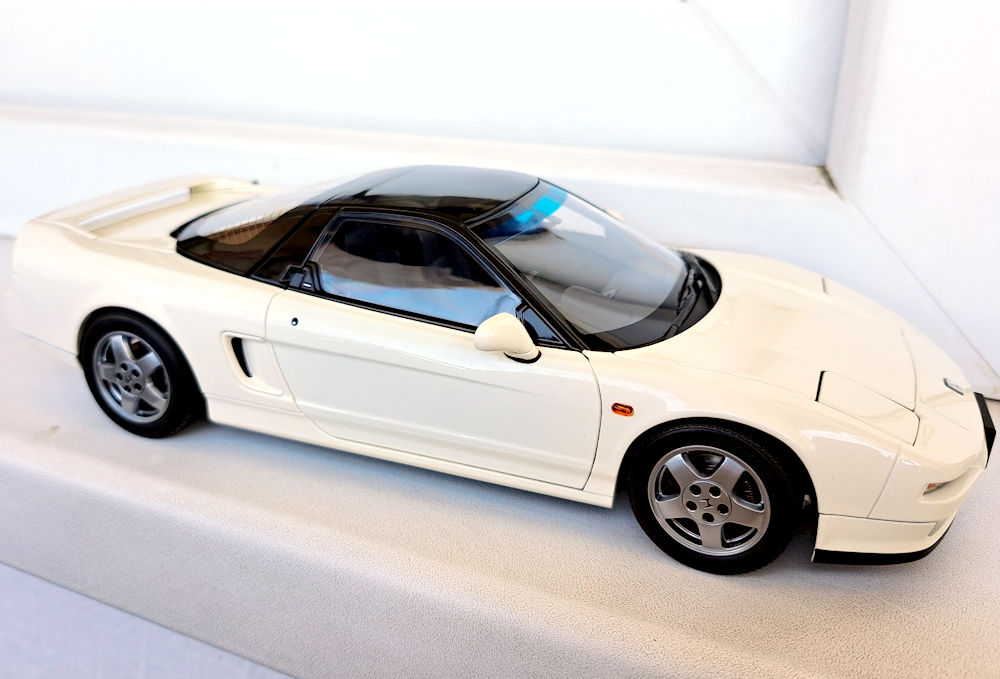
Out of the box, the exterior finish is striking. LCD captured the subtle nuance of Championship White perfectly—it presents as a warm, cream-tinged white rather than a stark, cold bright white.
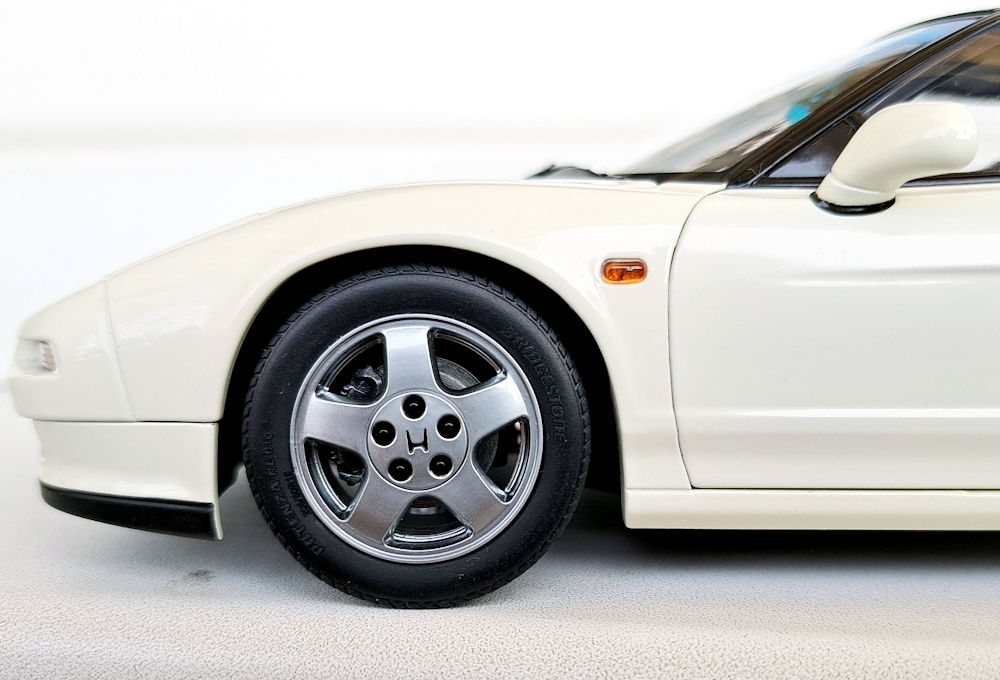
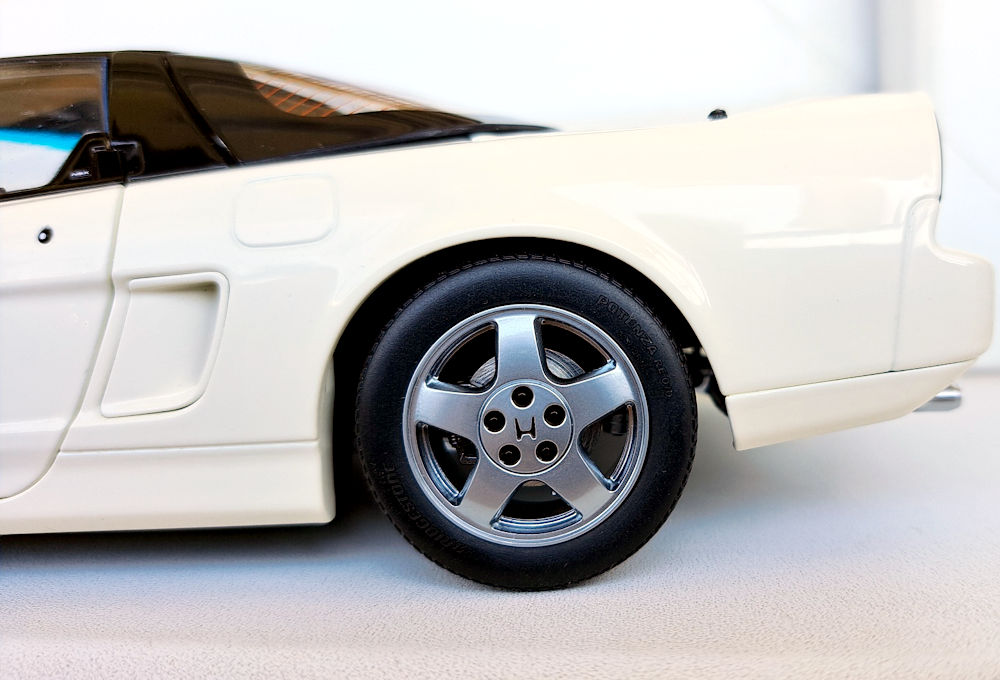
The stance and proportioning feel spot-on. The factory wheels are executed in a subdued, non-shiny metallic finish that realistically mimics real alloy rather than cheap silver paint.
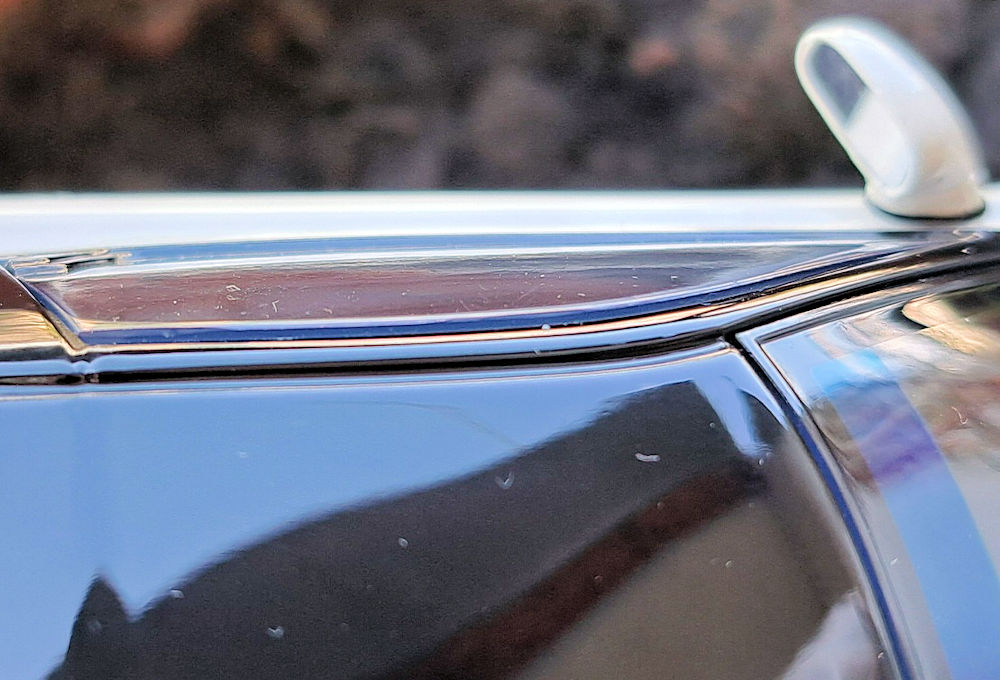
The shut-lines on this metal casting are impressively tight—almost too tight in certain areas. The door gaps are so precise that a standard plastic door-opener tool cannot wedge between the panels. Fortunately, a slight gap along the top edge of the side window glass allows enough clearance to safely hook the tool and swing the doors open.
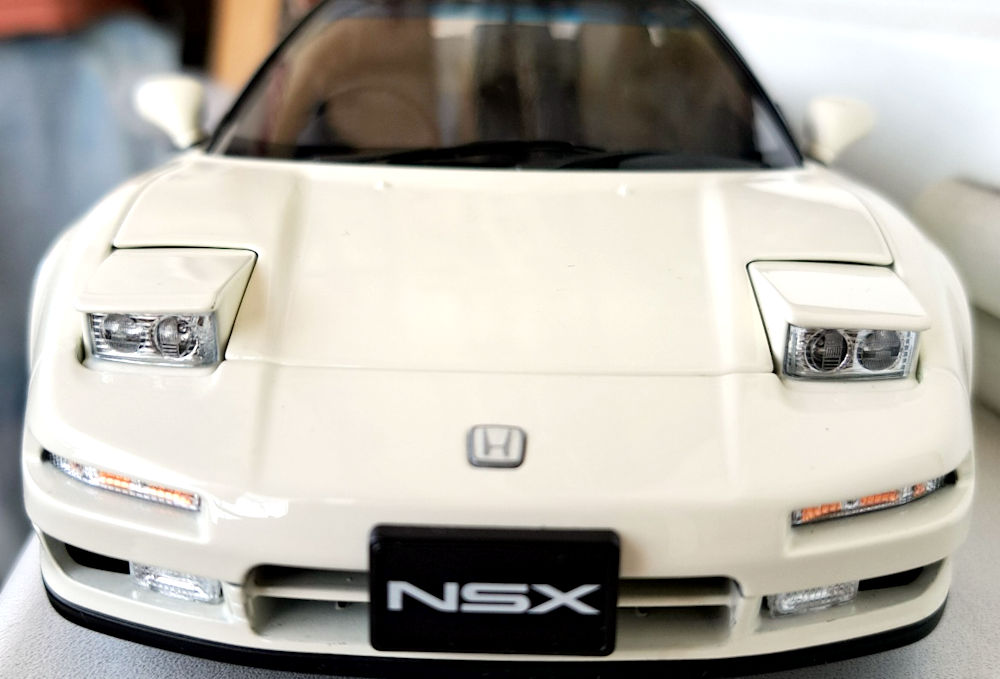
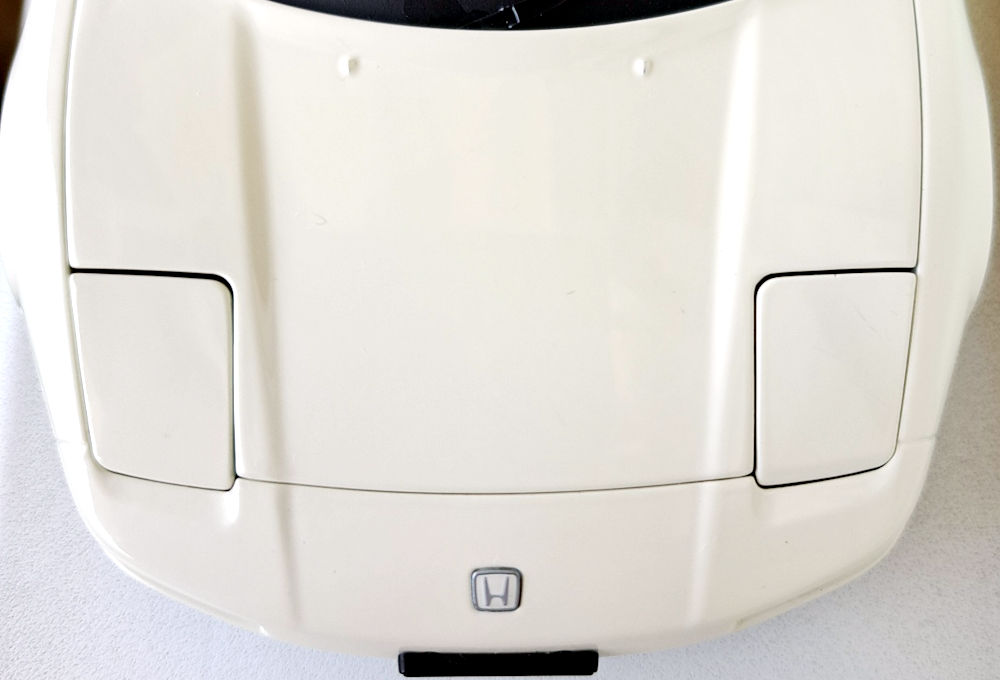
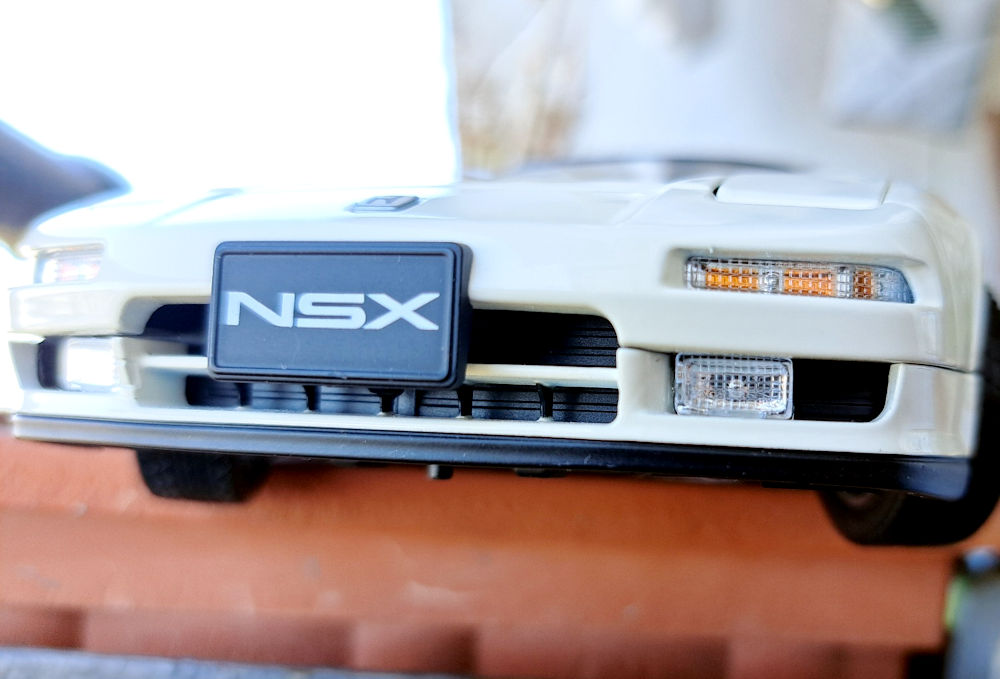
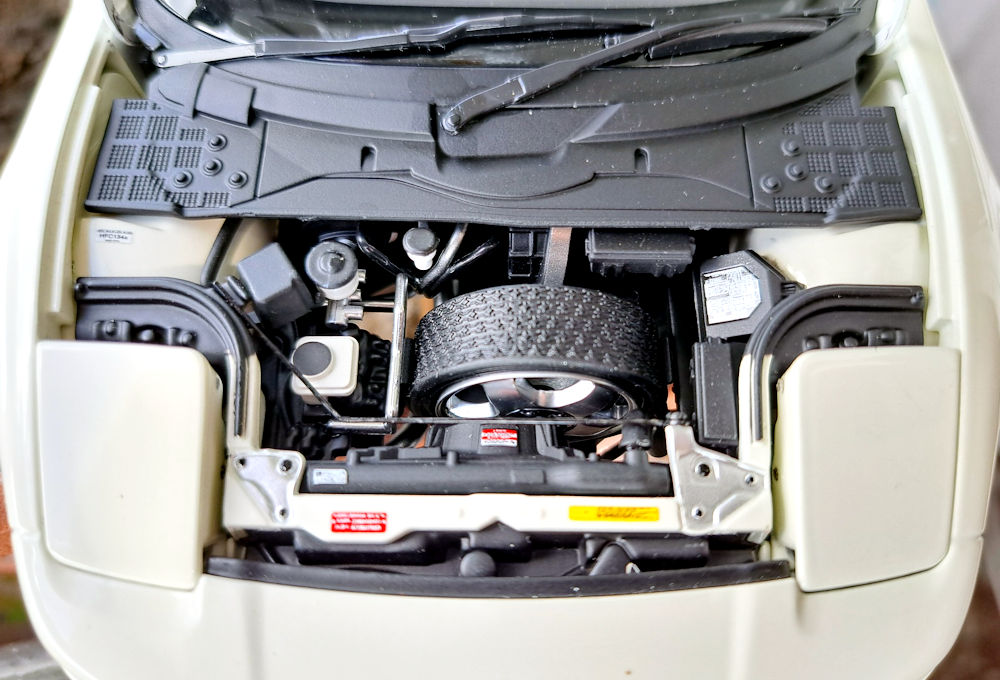
Panel gaps around the front compartment are minimal, save for the necessary tolerances around the pop-up headlights to allow free movement. Up front, the iconic Honda badge is a crisp, photo-etched 3D element rather than a flat print.
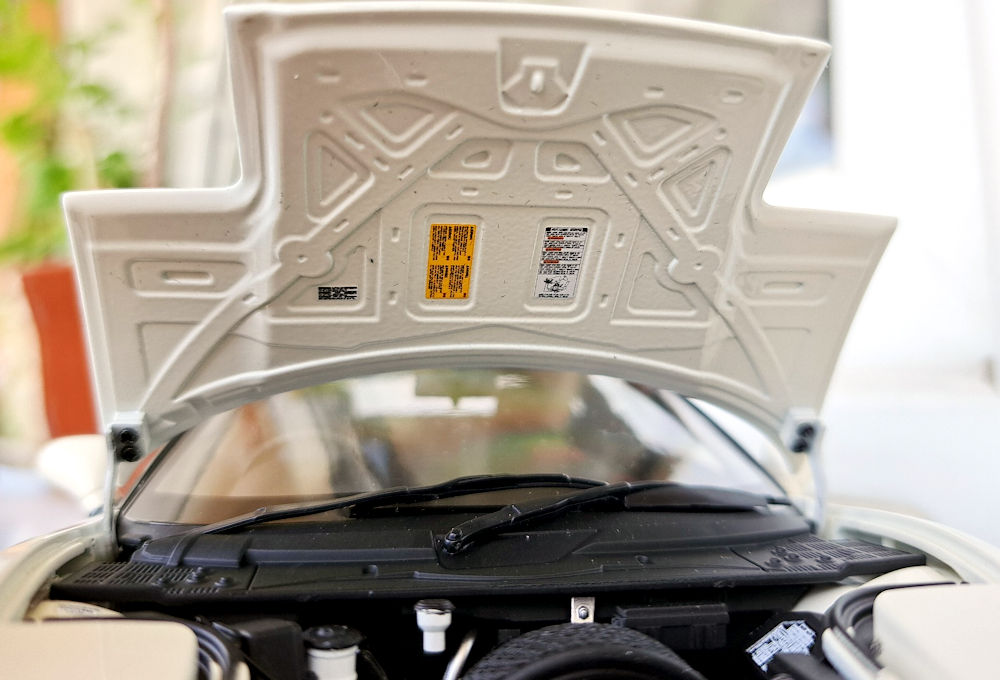
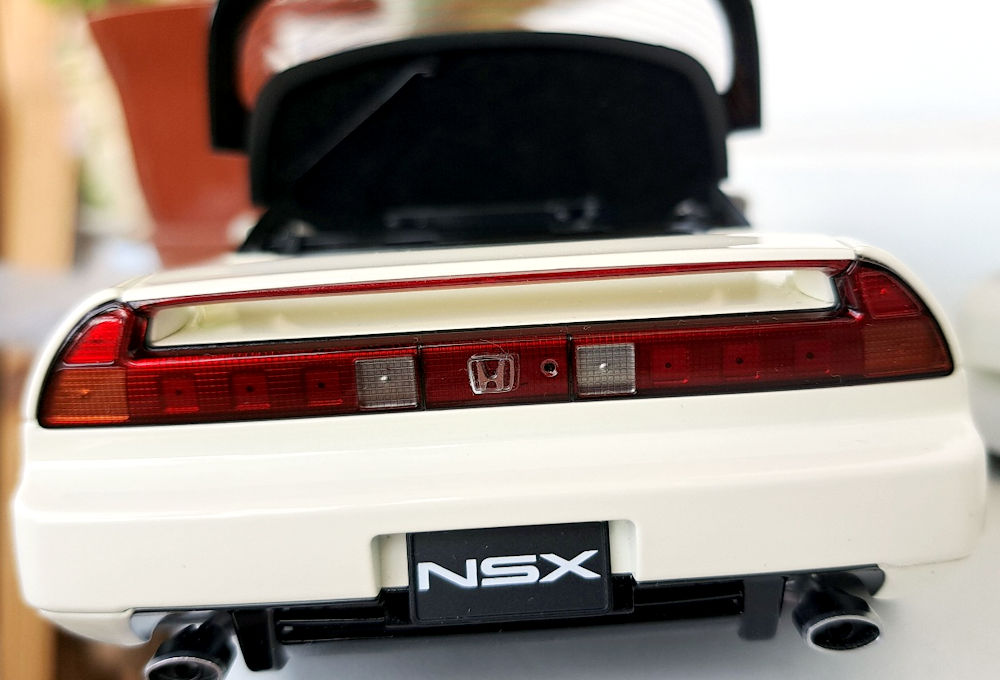
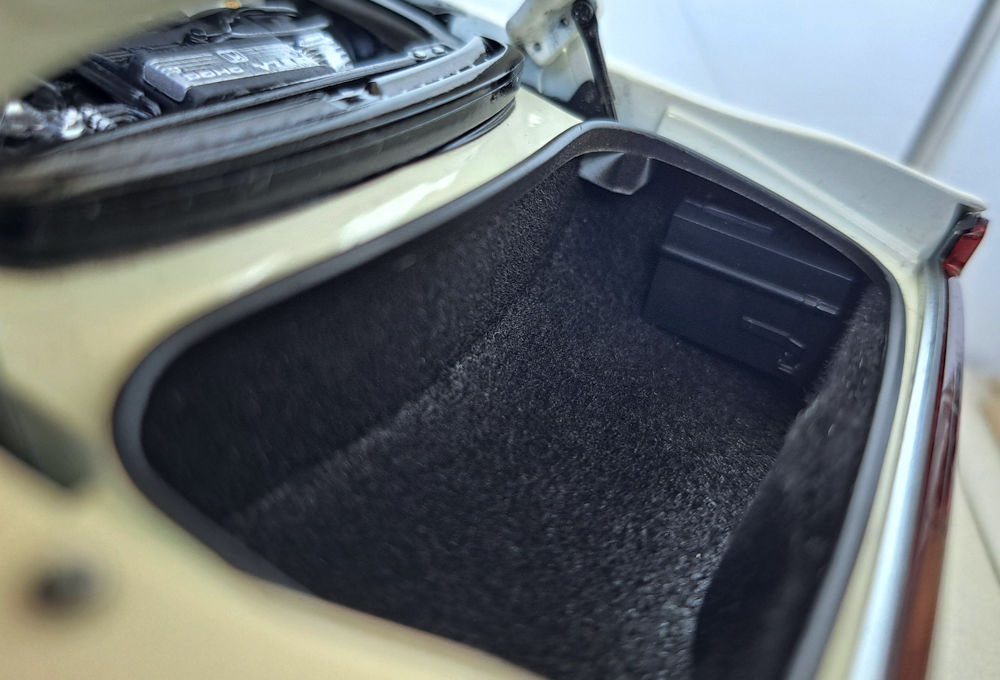
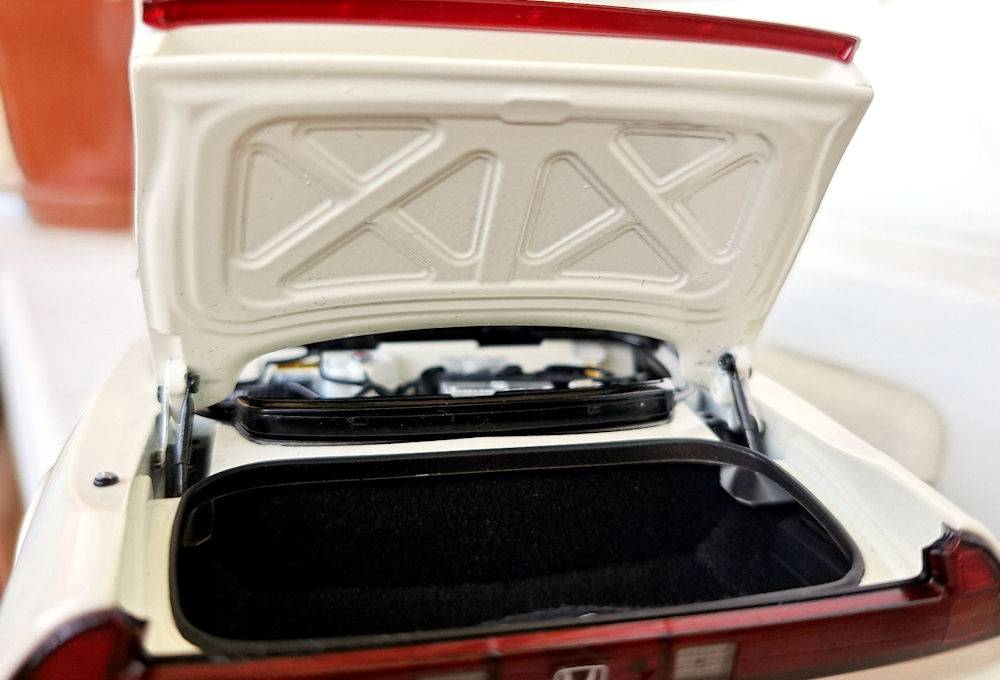
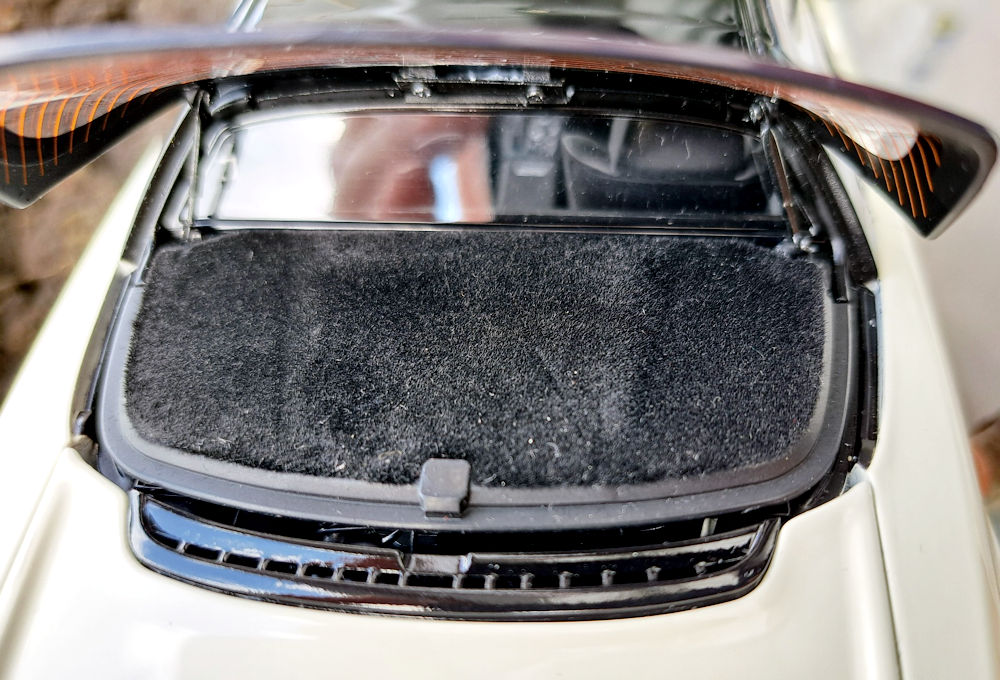
Fitting is extremely flush; opening the trunk lid requires applying gentle upward pressure under the rear wing. At the rear, however, lies a minor quality control issue: the rear Honda emblem is a thin foil transfer that was already beginning to peel at one corner out of the box.
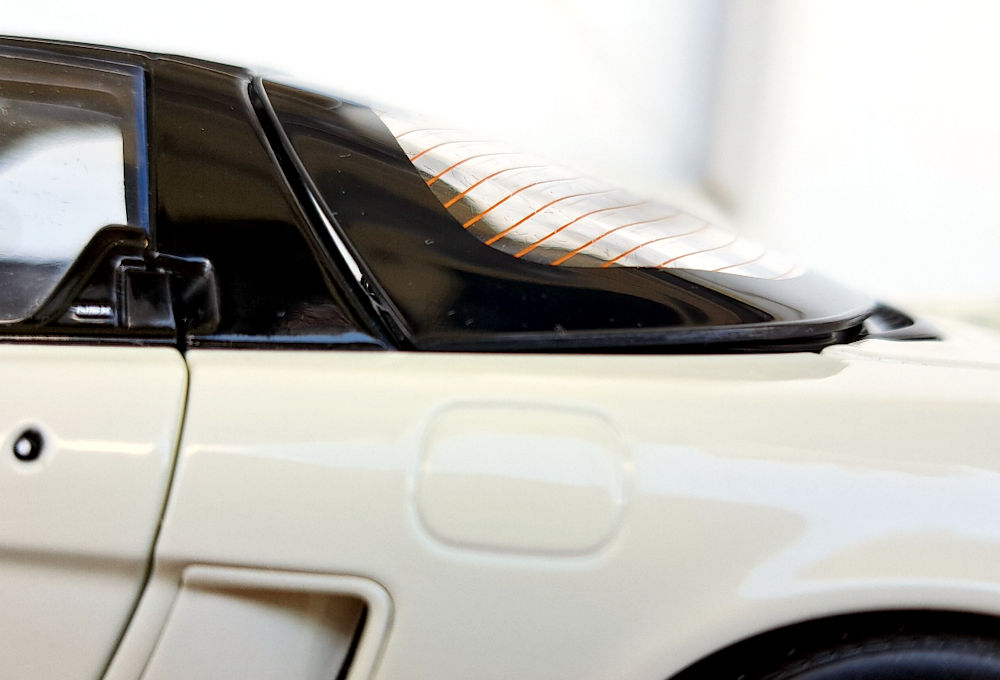
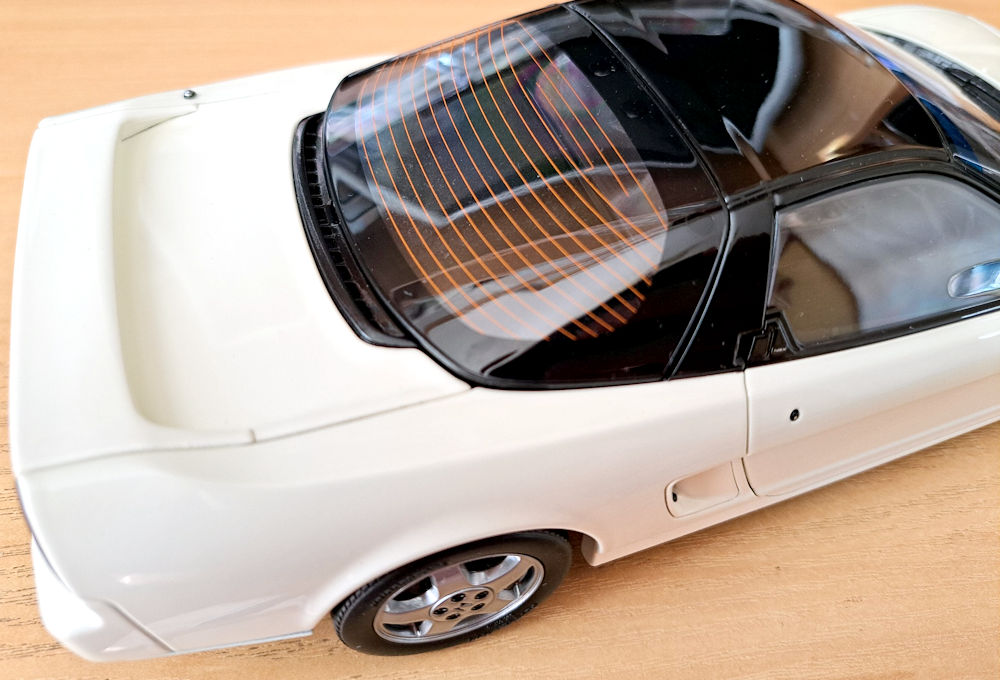
The primary structural flaw of this model resides in the main glass engine hatch. It fails to sit completely flush with the surrounding bodywork, leaving a noticeable gap along the sides and lower edge. While YouTube reviews note similar shut-line variance on AUTOart’s composite NSX, it remains the main visual imperfection on LCD’s metal body.
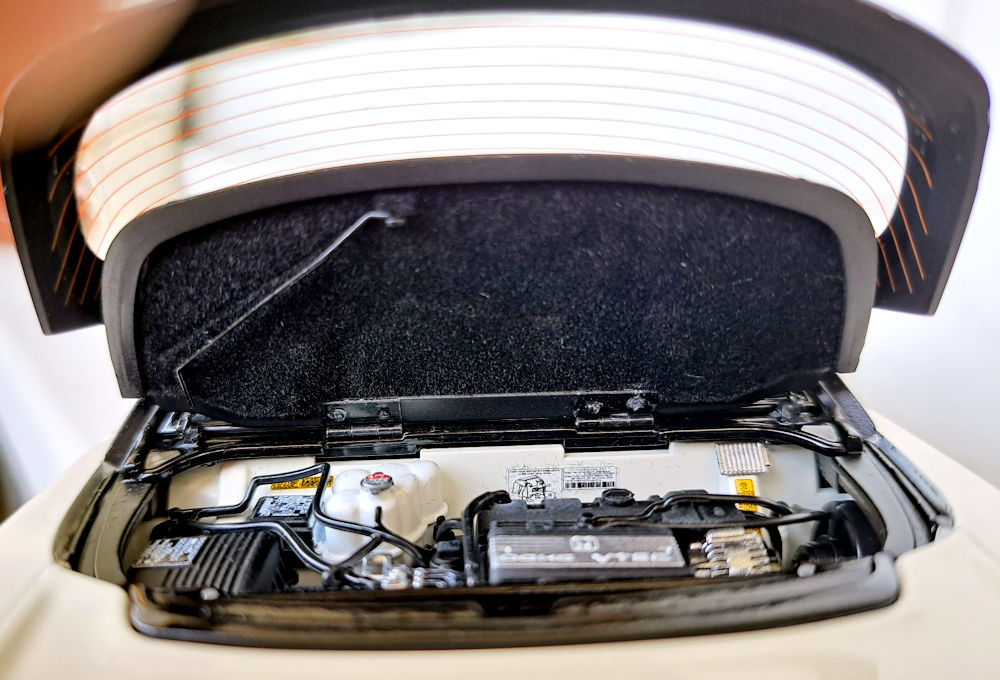
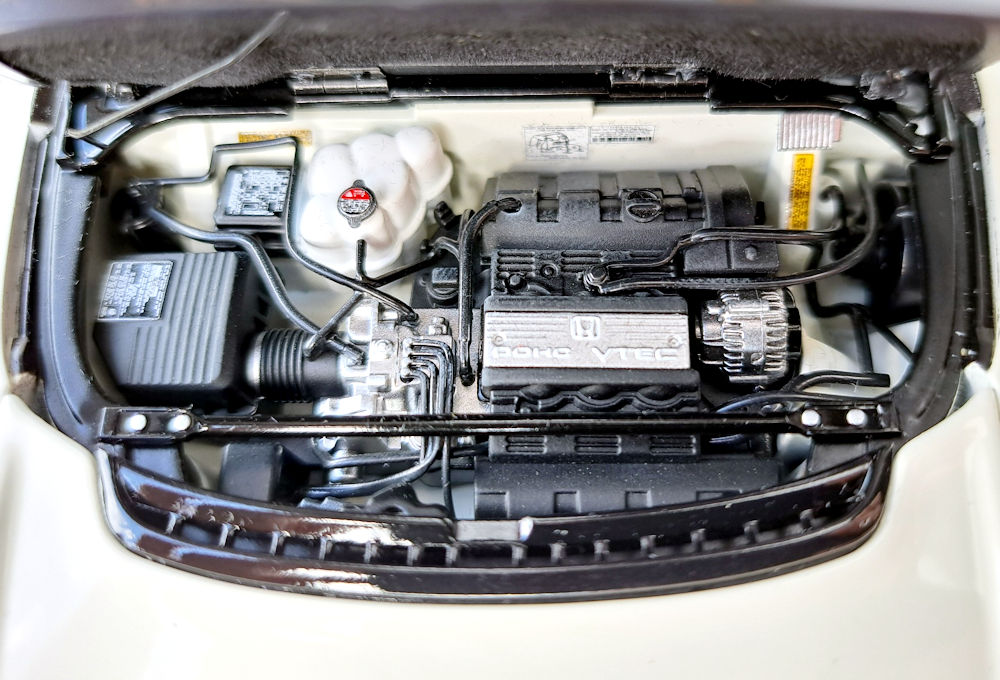
Directly beneath the outer glass hatch lies the secondary inner engine cover—a fully hinged, correctly textured unit that lifts to reveal the transverse V6 beneath.
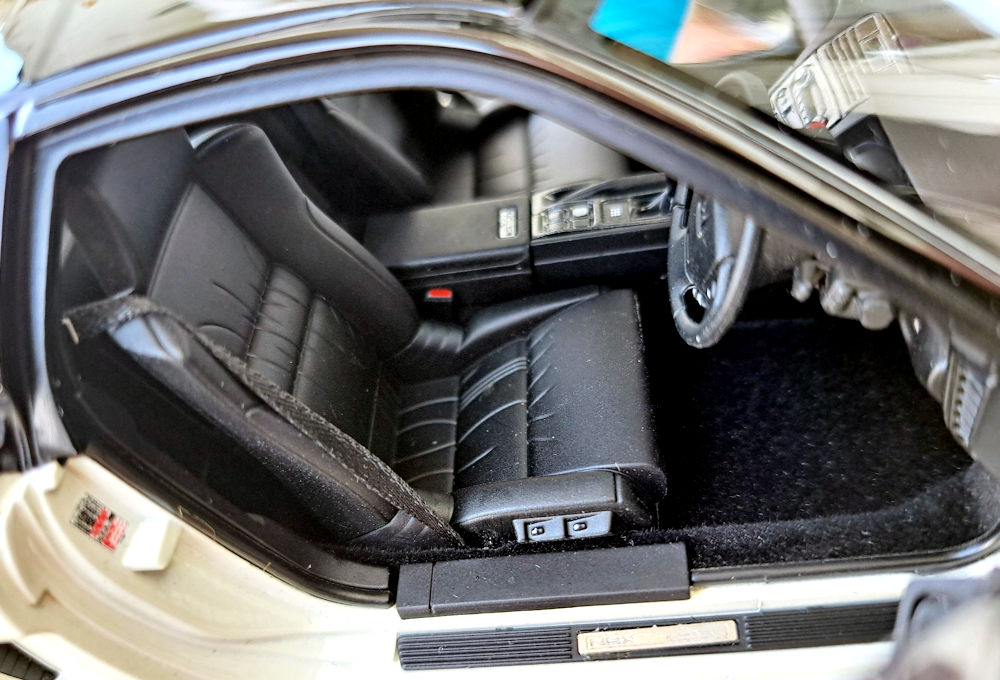
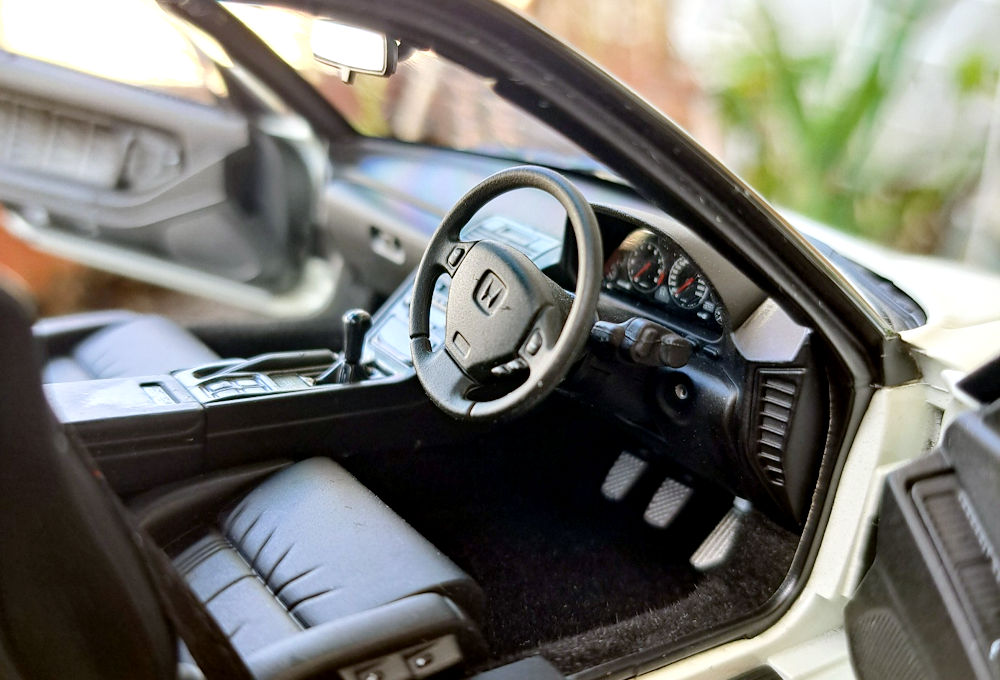
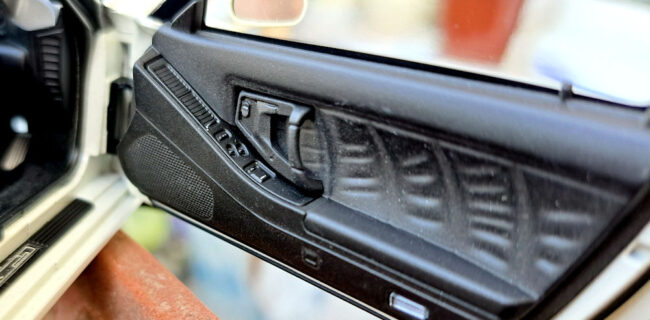
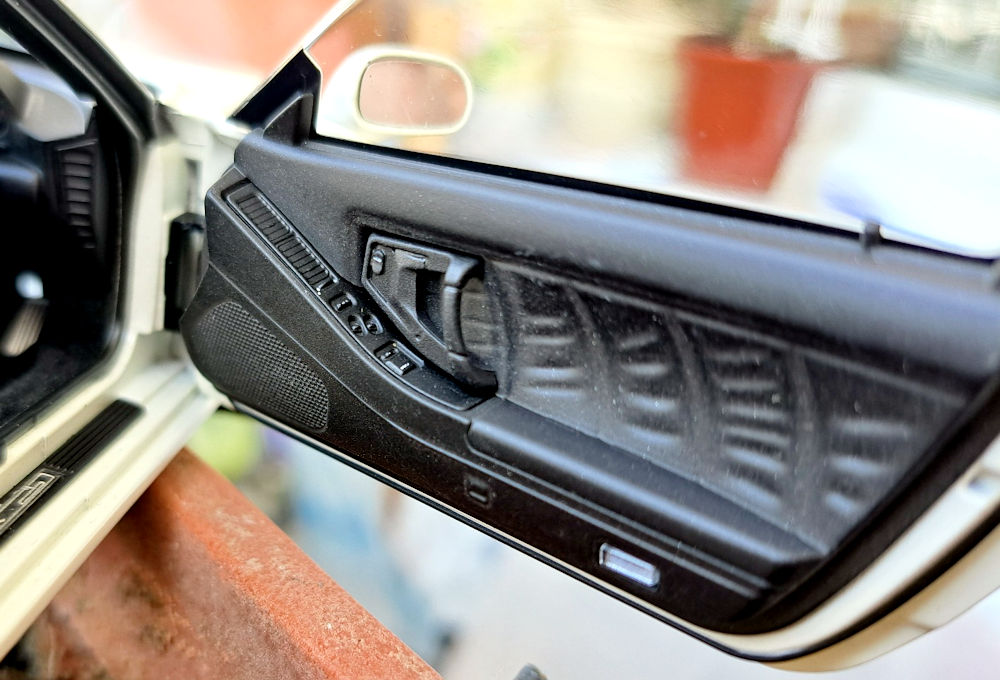
LCD executed magnificent surface textures on the seats, dash, and door cards, giving the plastics a convincing leather look. Colour accents, gauge cluster clarity, and interior flocking sit directly on par with AUTOart’s standard.
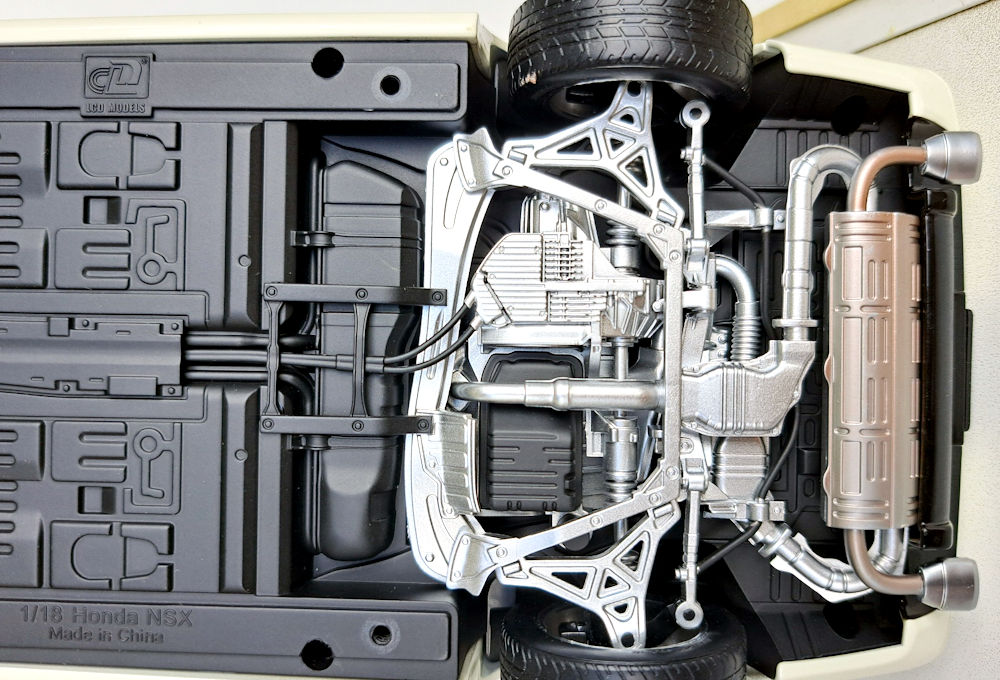
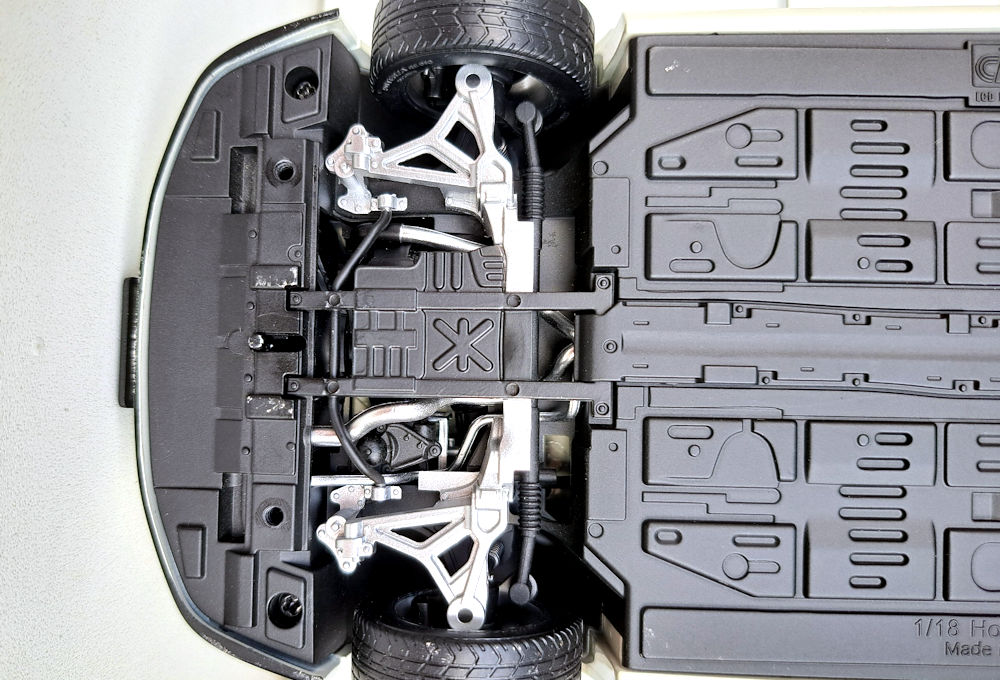
The chassis detail is impressive. You can trace the entire routing of the cooling system, observing the three silver lines from the front radiator as they transition into black piping toward the rear engine bay. Exhaust routing, suspension arms, and heat shielding are all fully moulded, though additional colour separation on individual underbody fasteners and brackets would have elevated it even further.
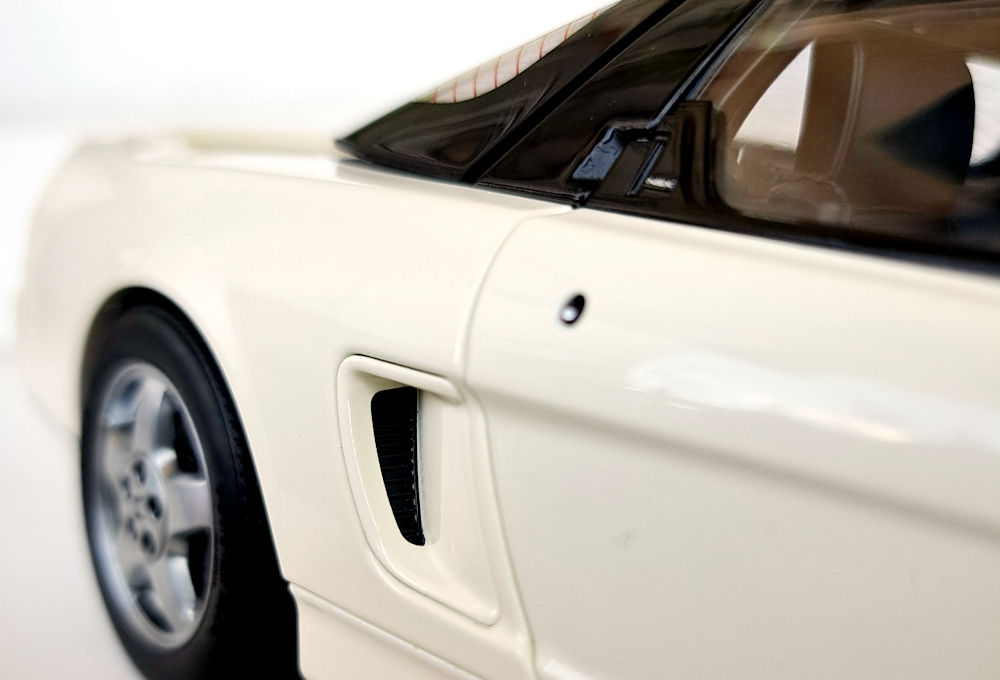
Where AUTOart holds a clear advantage is in its execution of perforated metal grilles. LCD relied largely on solid plastic mesh imitations across the front bumper intake and side air scoops. The only piece resembling a true mesh is the narrow vent between the rear glass hatch and the trunk, though its gauge is somewhat coarse.
LCD Models has produced a heavy, authentic die-cast NSX that captures the spirit and intricate mechanics of the original Japanese supercar. Unless photo-etched metal intake grilles and microscopic hatch alignment are non-negotiables for your display shelf, there is little reason to pay the massive price premium for AUTOart’s composite alternative. LCD’s NSX stands as a triumphant follow-up to their Supra A80 and a must-have for 1:18 Japanese sports car enthusiasts.

Thank you for the review, sir! The LCD is a viable option IF they can deliver and minimize QC challenges.
Having had the complete AUTOart assortment of the NSX offering over the years, I can confirm it’s a tough model to beat, in standard or variant formats.