
Let’s start by congratulating McLaren on winning the 2025 Formula 1 Constructors’ Championship! With this latest title, McLaren has now cemented its place as the second most successful team in Formula 1 history, boasting a total of 10 Constructors’ Championships. Three of those were won by Ayrton Senna, a name that needs little introduction. Revered by F1 fans around the world and widely regarded as one of the greatest drivers of all time, Senna played a defining role in one of the most significant chapters in McLaren’s history. Given his legacy, it was only fitting for the company to pay tribute to the legendary driver.
The McLaren Senna road car was first introduced in late 2017. Rather than beauty, the design focus was on extracting maximum performance, and the car redefined how extreme a road-legal car could be. Later in 2018, McLaren unveiled the Senna GTR at the Geneva Motor Show. It was originally intended to mark McLaren’s return to Le Mans. At the last moment, however, the decision was made not to take it racing. Rather than abandoning the project, McLaren focused their efforts on turning it into an ultimate track weapon.
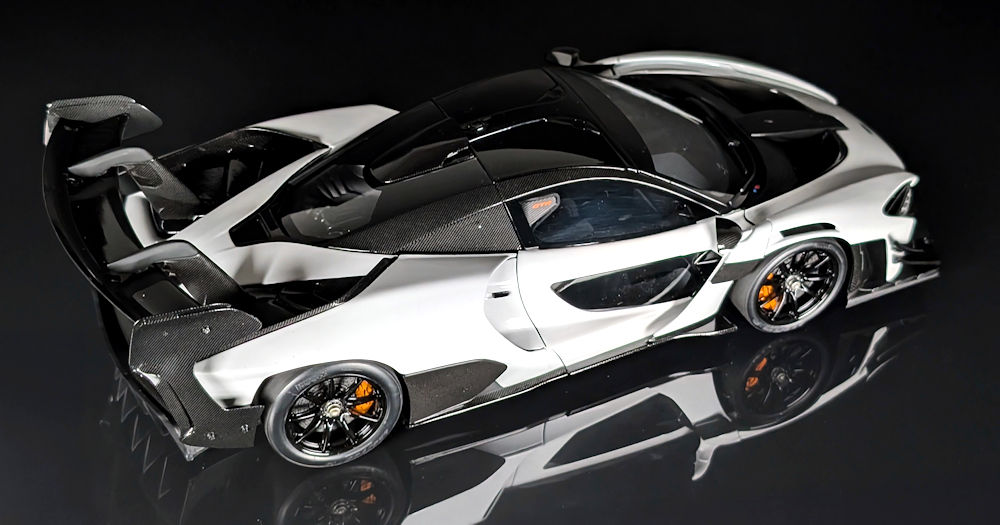
Unrestricted by racing regulations and sharing components with the 720S GT3, the Senna GTR was the fastest car McLaren had ever produced at the time, outside of a Formula 1 car. It was also the third of the ultimate series McLarens, with just 75 units built. Powering the car is a mid-mounted, twin-turbocharged, 4-litre V8, producing 814 horsepower and 590 pound-feet of torque. While top speed and 0–100 km/h figures haven’t been disclosed, one can expect it to be as fast, if not faster, than the road car. One thing we do know is that the car generates a ton of downforce, literally one thousand kilos! At a time when hybrid systems and batteries are becoming the go-to solution for extreme performance, McLaren stuck to an internal combustion engine. Kudos to that!

Enough said about the car, let’s dive into the review and find out how well LCD does at capturing the essence of the real one.
PACKAGING
The model comes secured in a styrofoam box that’s slightly larger than some of the brand’s earlier releases, but similar in size to the Pagani Huayra R. Inside, you’ll find a screwdriver, a prying tool for opening the doors, an instruction card, and a McLaren logo-shaped QC card. The rear clamshell is stored away in the top section of the styrofoam shell. Upon opening up the box, you will be treated to the view of the model with its engine bay fully exposed.
EXTERIOR
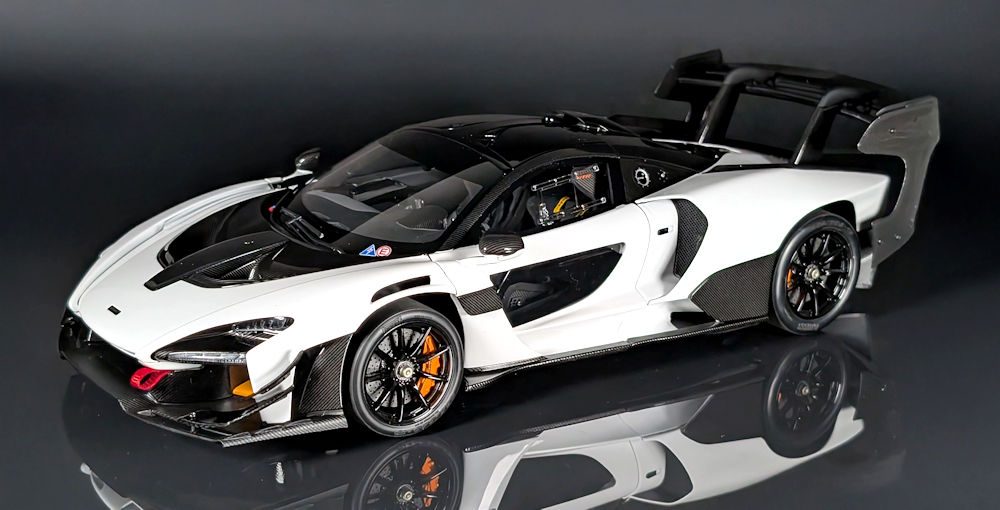
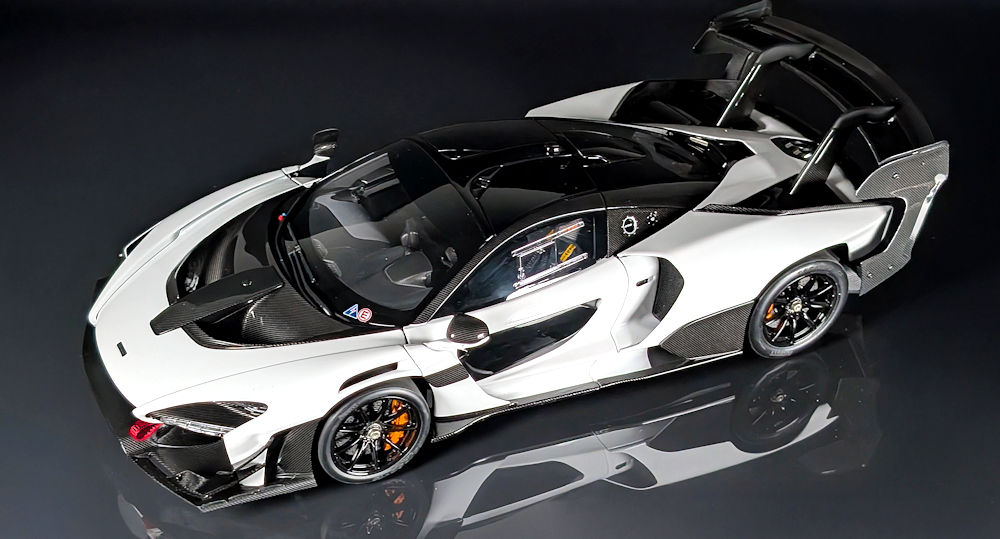
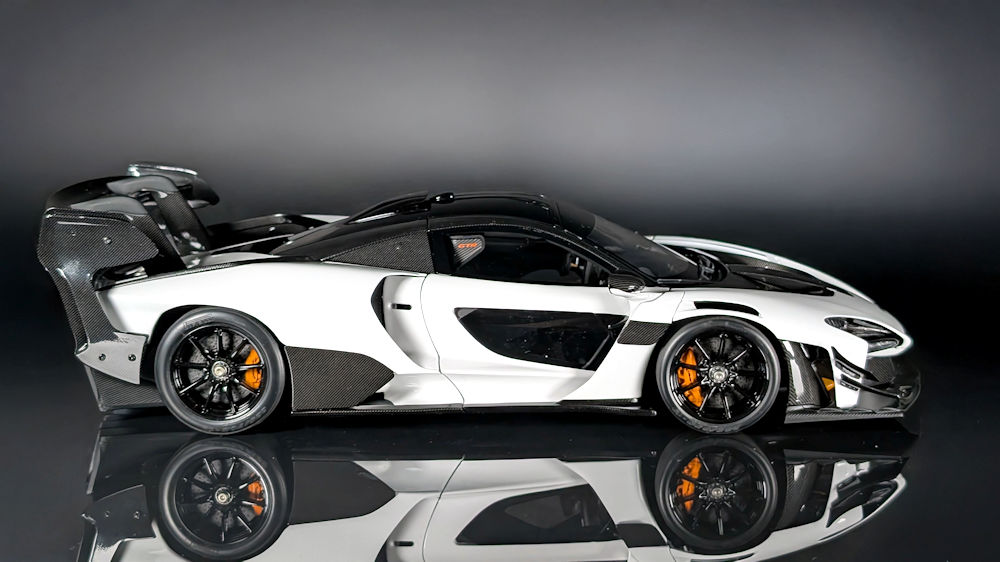
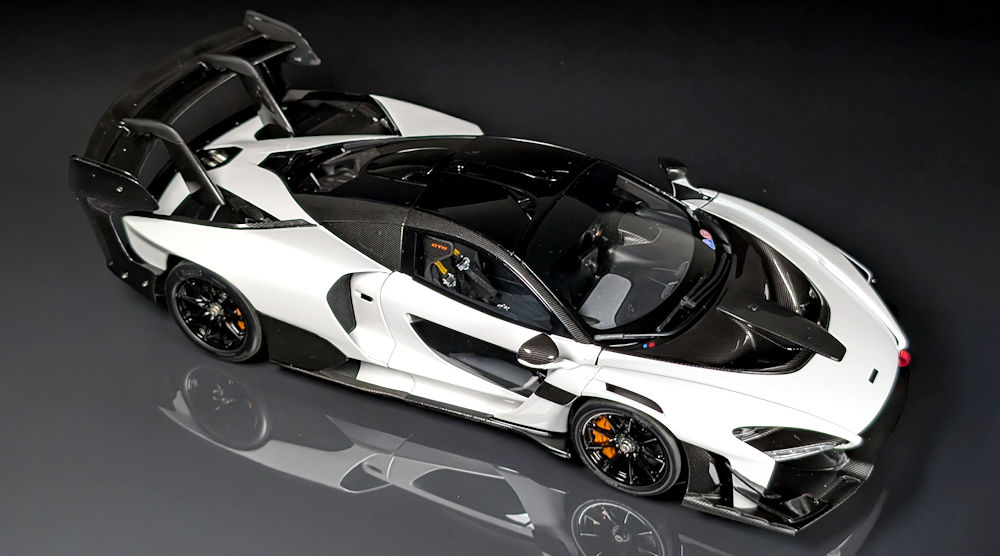
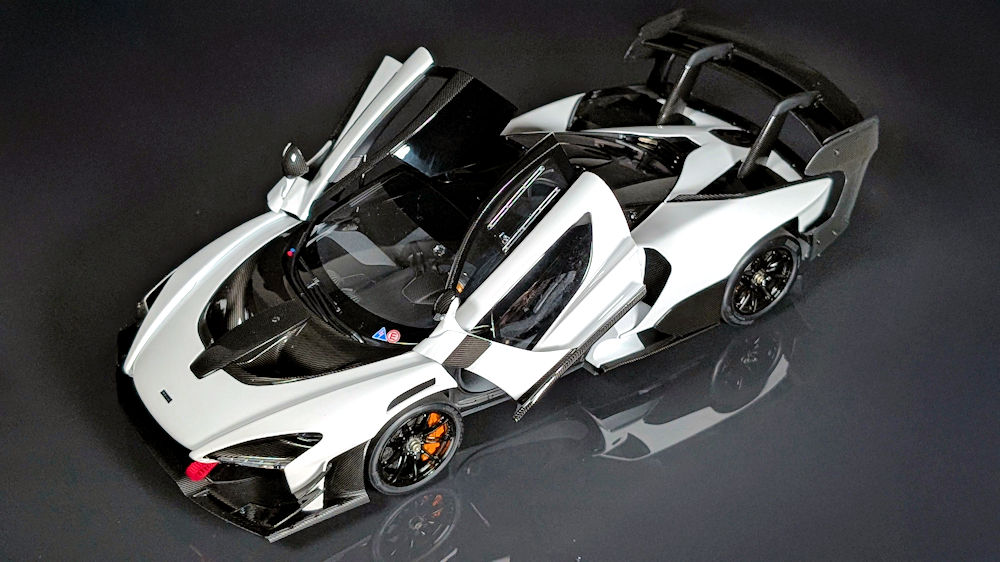
The exterior is presented in white, making every detail easy to see and appreciate. Aside from white, a Marlboro livery spec is presently the only other option available to purchase at the time of this review.
With the rear clamshell on, the model weighs 732 grams (1.61 lbs). Ensure that the opening for the exhaust in the clamshell is perfectly aligned with the exhaust pipes sticking out from the engine bay when installing it. If care isn’t taken, you could end up scratching the model.
Based on images of the earlier sample, panel fitment adjacent to the headlights may have been of concern to some. I’m happy to report that on the production model, this issue appears to have been rectified. The overall shape is captured well, though the ride height on this piece in particular appears to be a bit high on the front driver side, and sagging on the passenger side. Having looked through photos posted online by other collectors, they all seem to appear fine and have a more balanced and lower ride height. The shut lines are acceptable for a diecast model, and the paint finish is consistent all around.
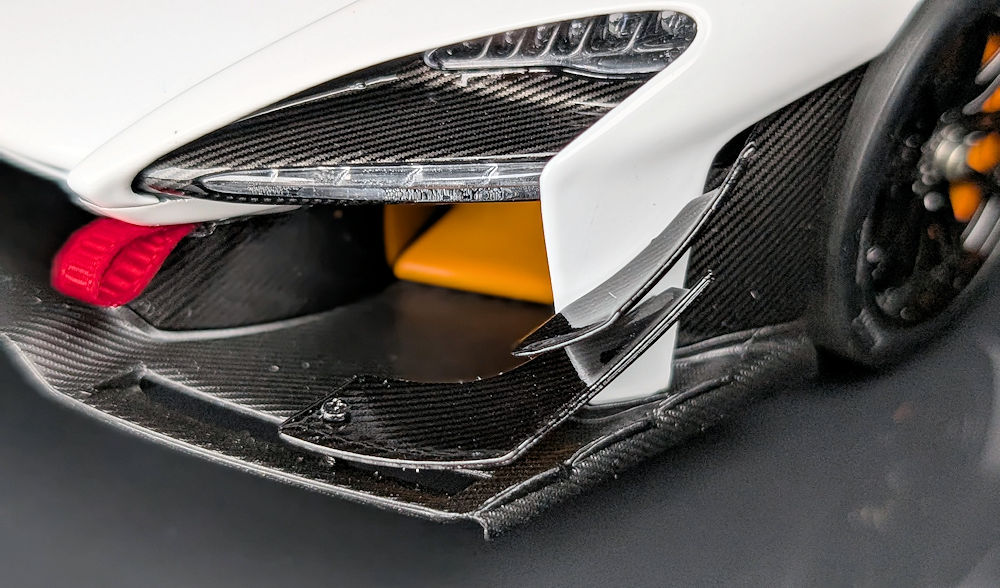
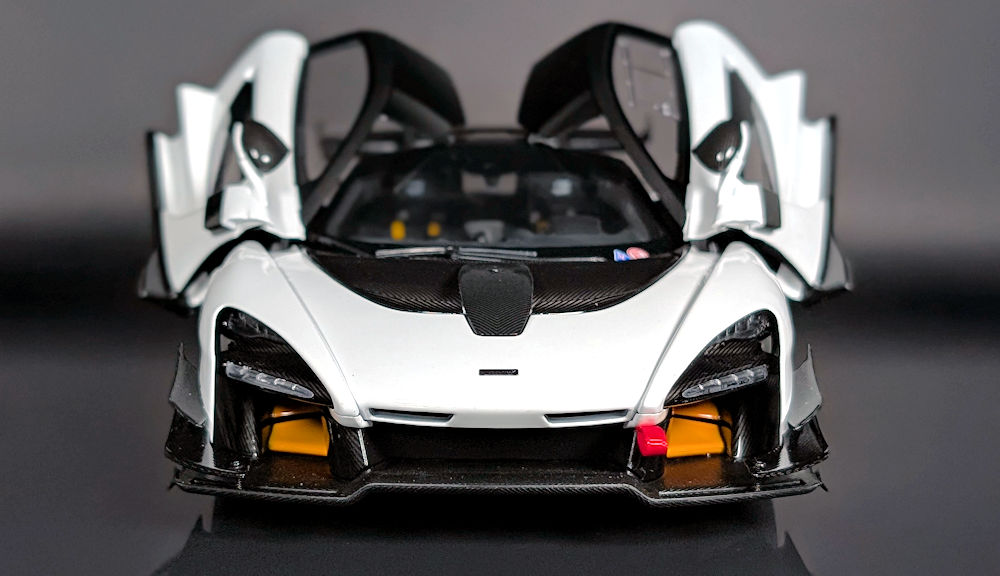
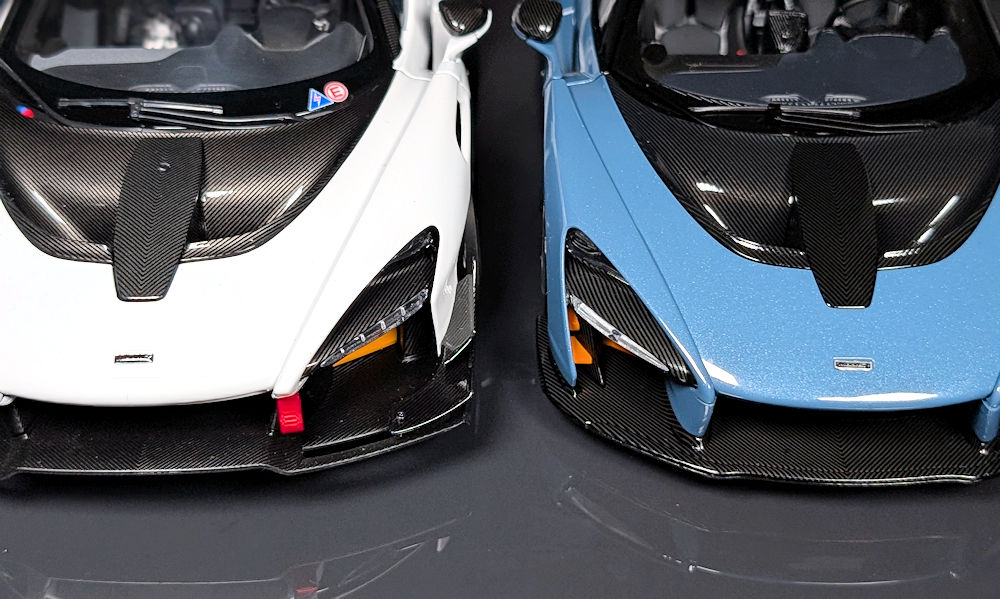
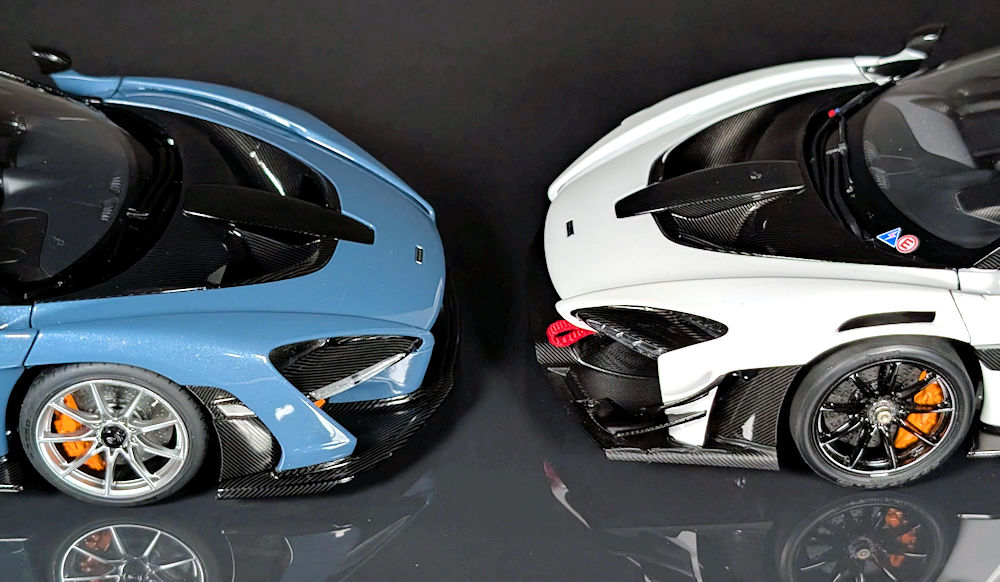
In the front, some of the most notable differences compared to the road car include a larger front splitter and side canards. The splitter is made from carbon fibre textured plastic. The canards are, however, finished in carbon decals, which are glossy in finish, giving them a more realistic appearance.
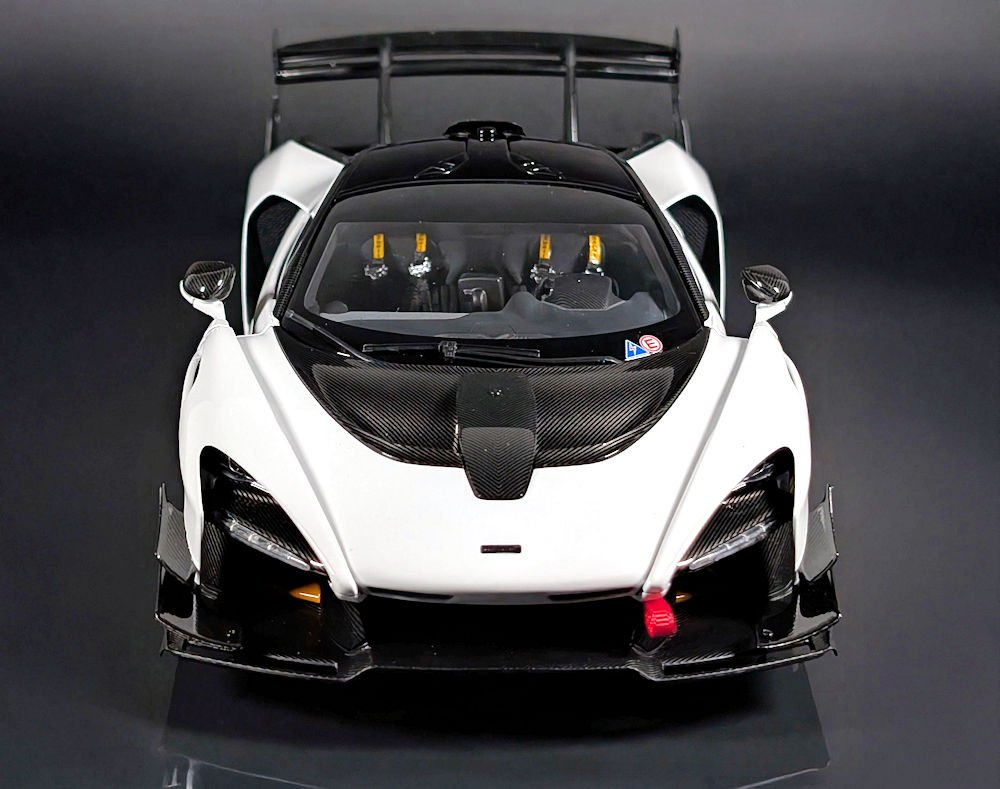
The McLaren badge on the hood looks sharp. The details of the main headlight assembly are somewhat subdued by the black housing, but are represented well. The execution of the DRLs is also acceptable for a model at this price point. The red tow rope and papaya orange active aerodynamic flaps on either side of the front radiator add a splash of colour to an otherwise black & white exterior. The tow rope is recreated using fabric, which is a neat detail.
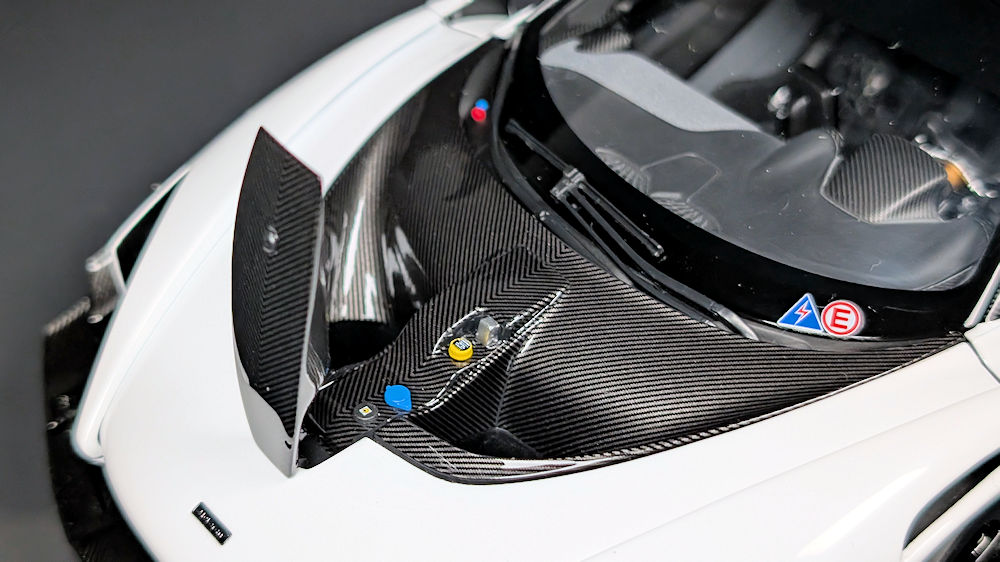
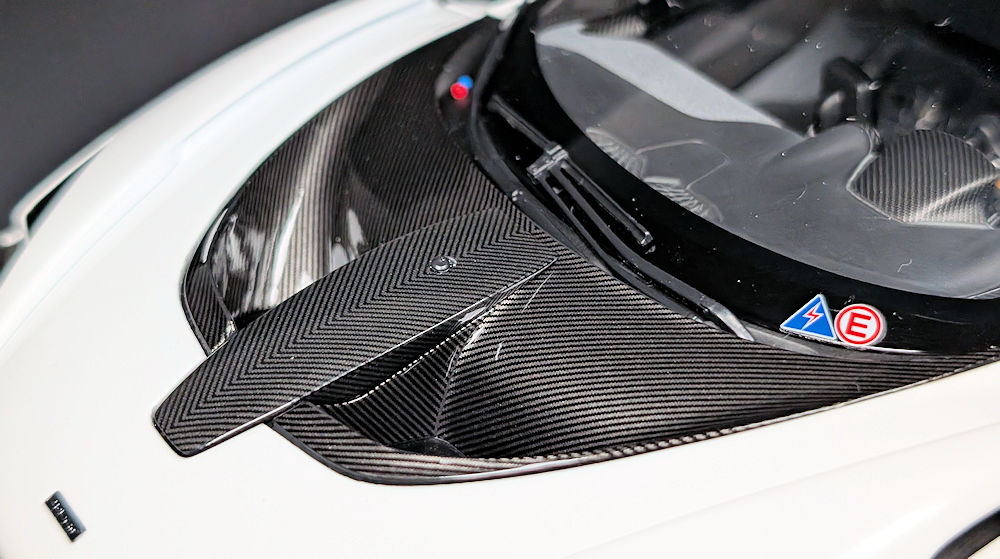
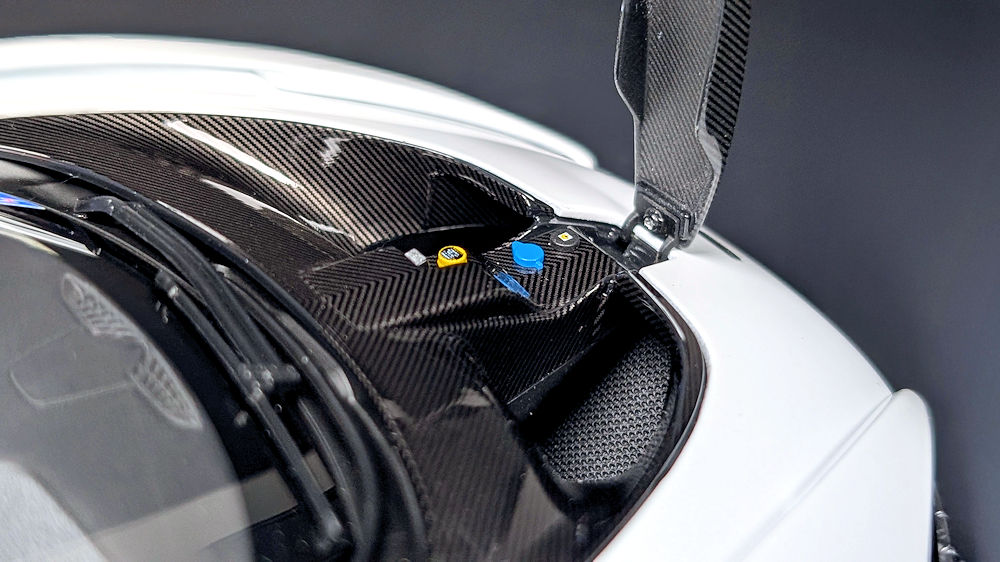
The large hood vent and the panel running across the middle are both finished in glossy carbon decals with perfectly aligned weaves. Just like on the real car, this panel can be lifted to access the windshield washer, steering, and transmission fluids. In comparison, AUTOart’s Senna road car lacks this feature, and going by the pictures they released of the sample, their Senna GTR doesn’t seem to have it either.
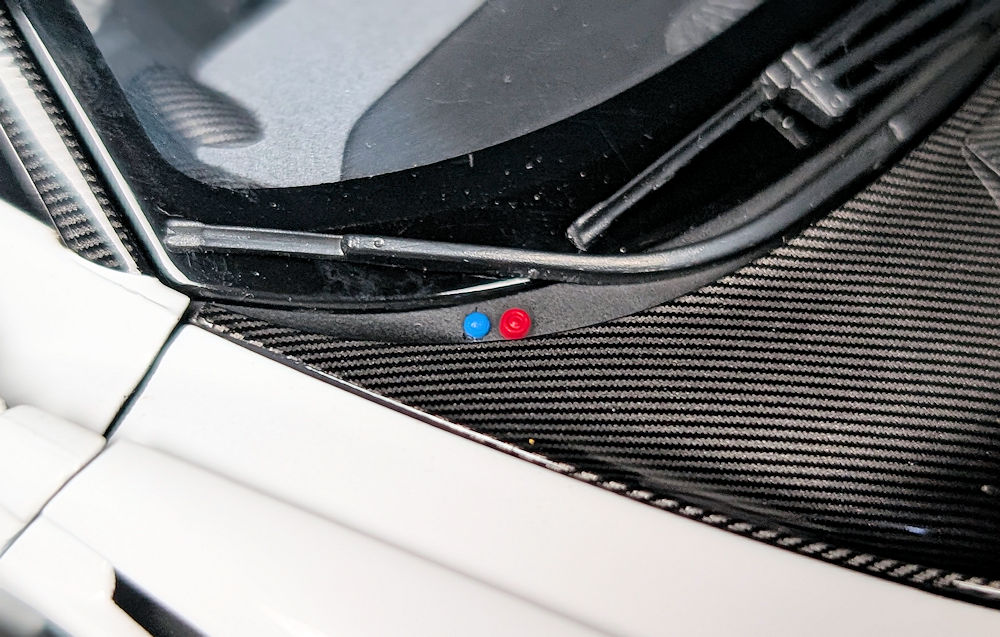
Visible through the large opening in the hood is the radiator, which is faithfully recreated. On the passenger side, just below the windshield wiper, are little red and blue buttons, with the respective identification labels located on the driver’s side. If you are wondering what they’re meant for, the red button operates the fire suppression system, while the blue one is the electrical kill switch to turn off all power to the car. Both are intended for use by the support staff in emergencies.
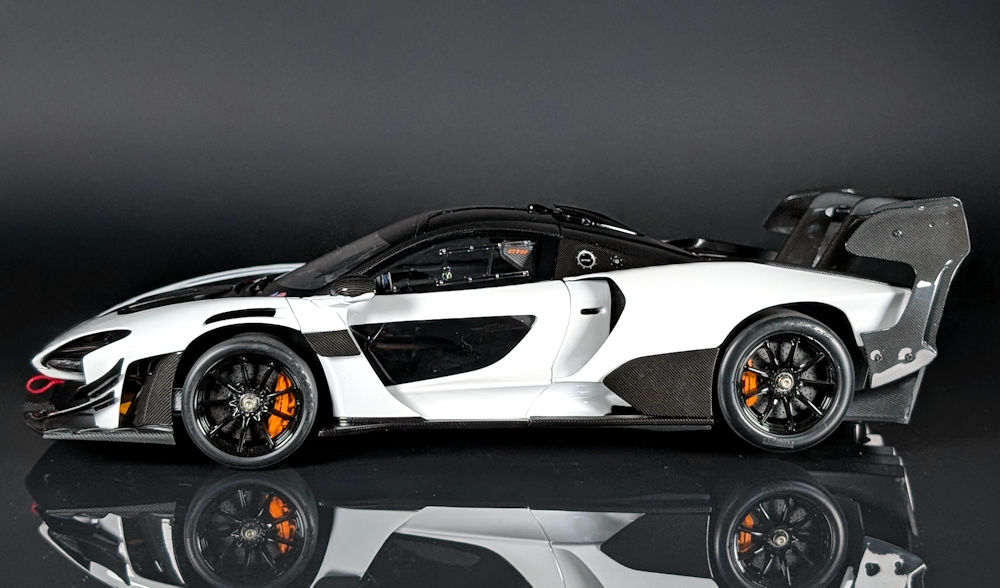
Moving along the side, the model looks a lot more aggressive than the road car, thanks to wider fenders and slick tires. The openings in the front fenders, which are unique to the GTR, are neatly incorporated.
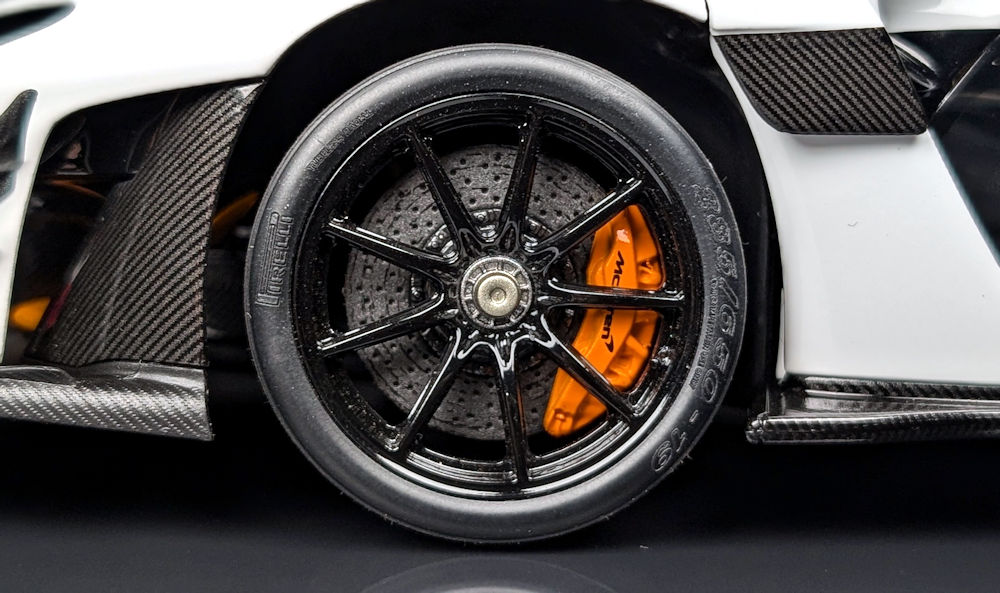
The black centre-lock wheels are excellently detailed, and feature Pirelli branding, tyre size markings, and even proper valve stems. The tyres come with a lightly scrubbed finish, which contributes to the overall realism. Behind the rims, the orange McLaren-branded brake calipers and carbon ceramic brake discs are both skillfully reproduced.
One standout feature of the model is the folding carbon fibre mirrors, which function smoothly and look great.
The signature see-through glass panels in the doors are present, while the road car’s F1-inspired split side windows have been replaced with more traditional ones. There is a small sliding window on the driver’s side, in true track-car fashion, but it is non-functional on the model. The plastics used for the windows and windshield are fairly clear.
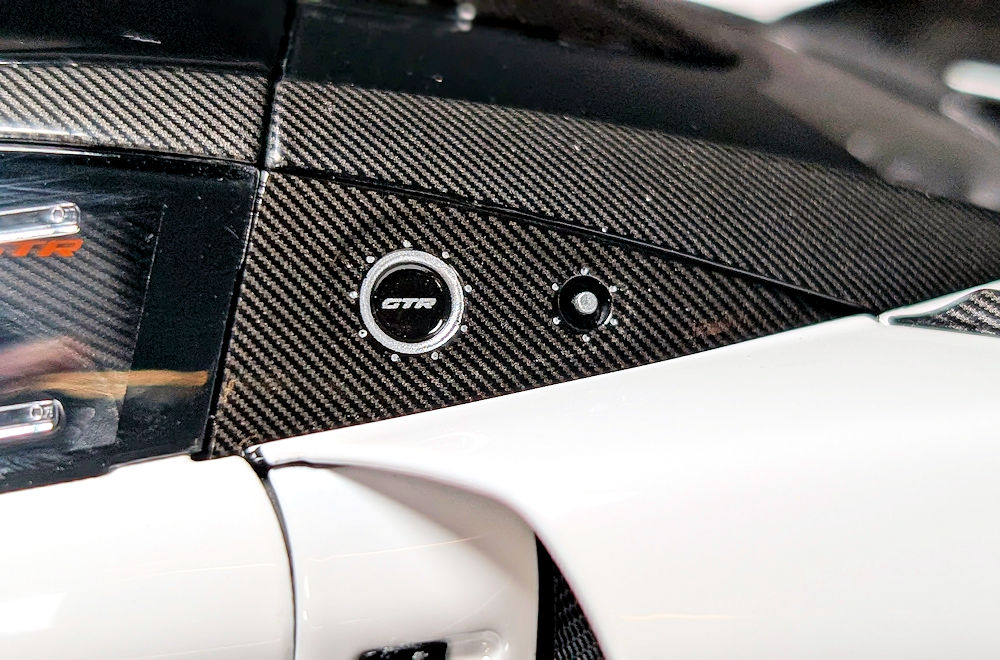
Located just behind the driver’s side window are the neatly replicated fuel receptacle and pump-out nozzle, both of which are unique to the GTR compared to the road car.
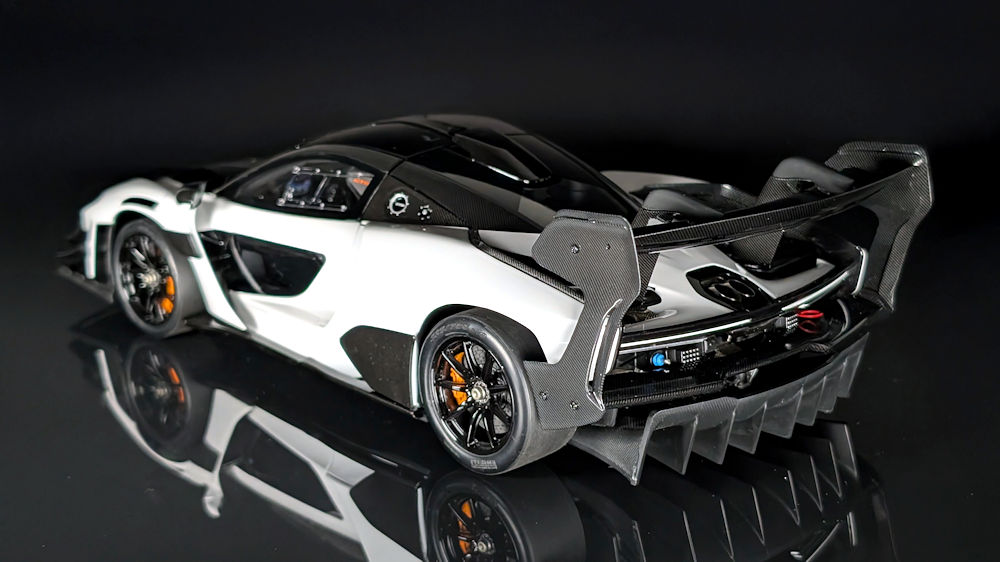
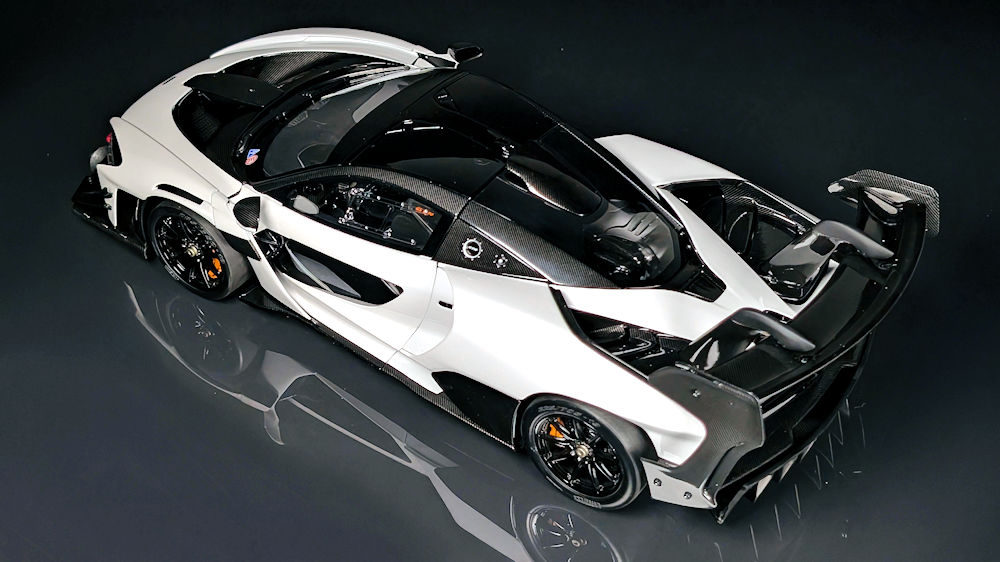
The large intakes integrated in the clamshell on either side come capped with mesh, as you’d expect from a premium model. LCD has also done a great job replicating the way the bodywork tapers towards the rear and exposes the wide racing slicks.
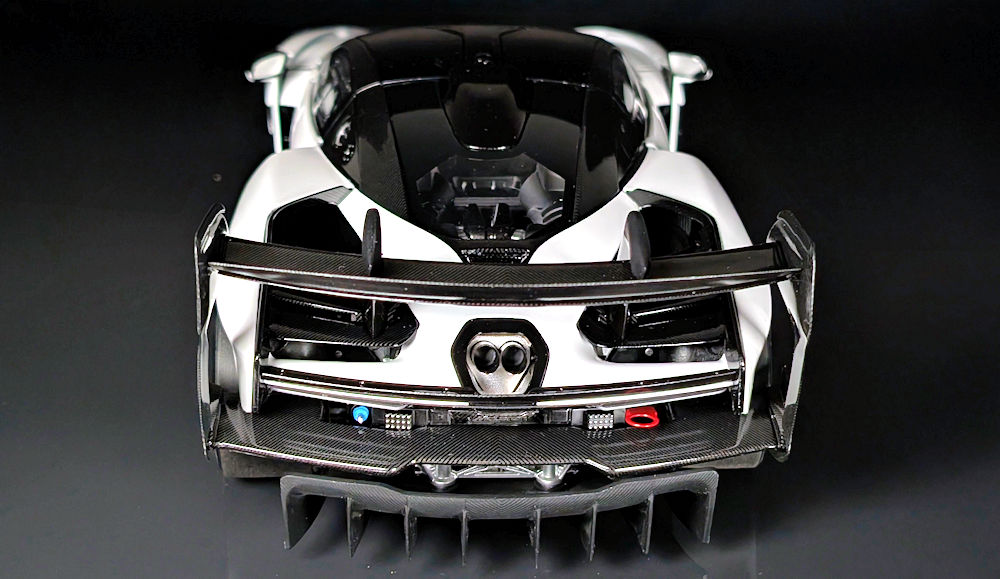
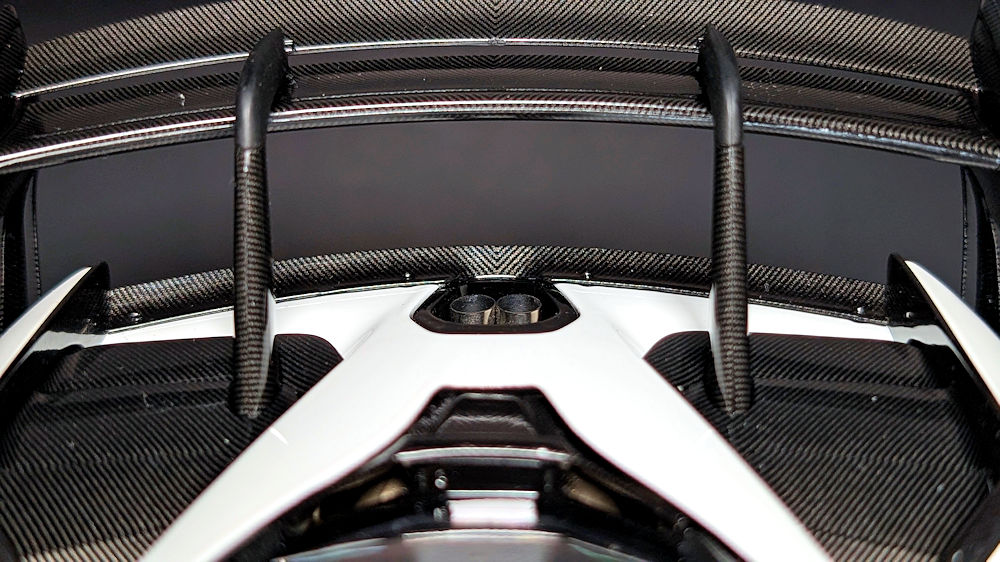
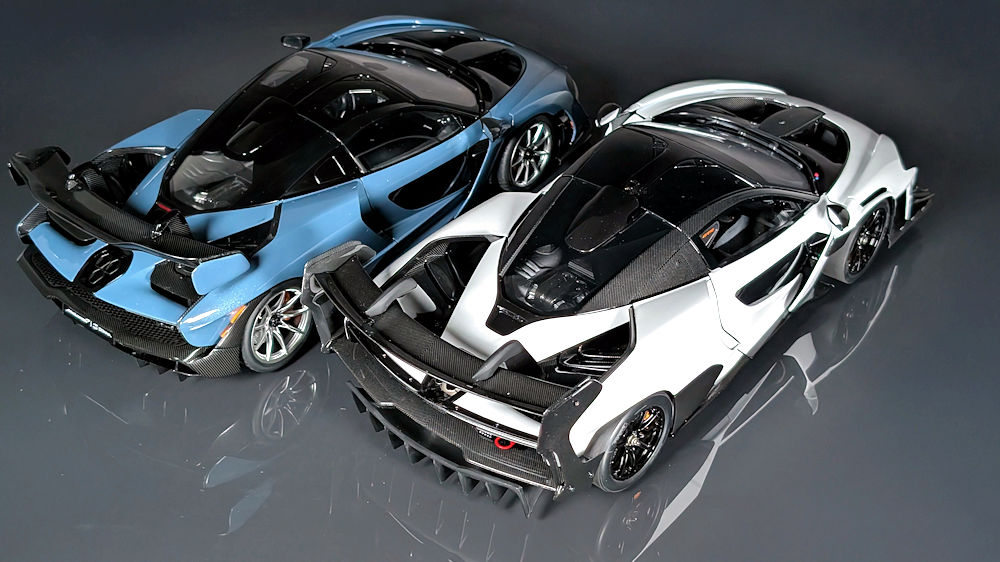
Shifting focus to the back of the car, the first thing that grabbed my attention was the enormous rear wing – which, by the way, is non-functional. As the GTR isn’t constrained by U.S. crash regulations or any motorsport sanctioning body, this freedom allows the rear diffuser to extend well beyond the bumper, with the rear wing protruding just as aggressively. Massive end plates are attached to the rear wing on either side, which help to smooth out airflow along the sides of the car. The intricate detailing of both the rear wing and diffuser is very well executed. While the wing is finished with carbon decals, the rear diffuser is unfortunately made from textured carbon fibre plastic.
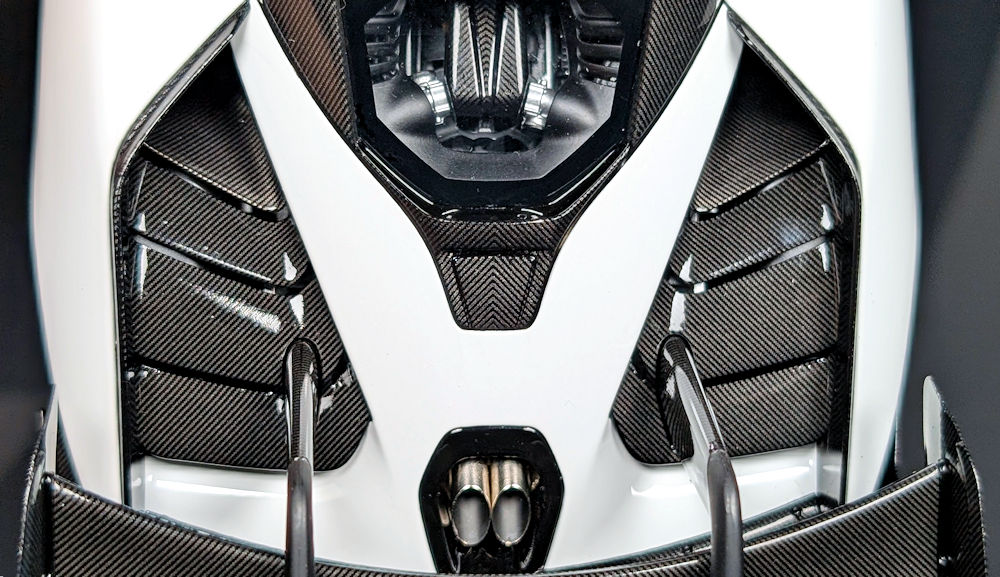
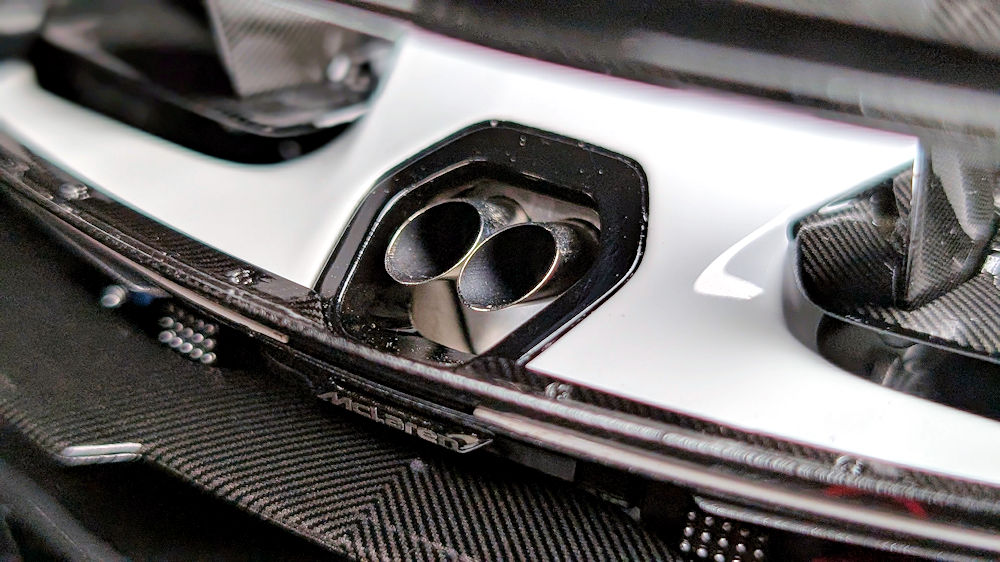
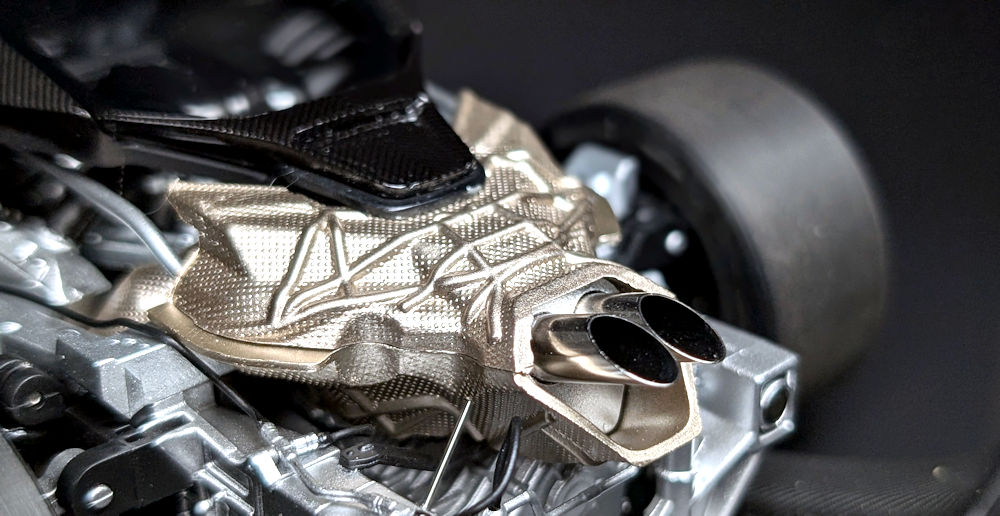
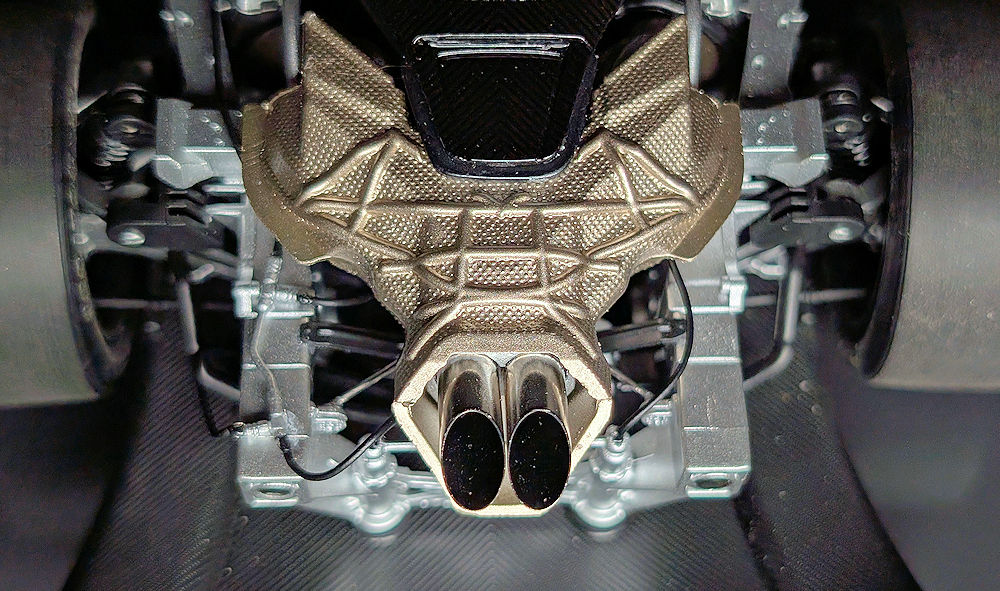
A clear window atop the clamshell offers a sneak peek at the engine beneath. Positioned just below it on either side are carbon fibre gurney flaps ahead of a succession of stepped louvers which are beautifully put together. Located at the bottom centre are the twin titanium exhaust pipes exiting the top of the clamshell, which look quite rad!
As with the real car, due to the absence of a rear mesh, some of the intricacies of the air-jack system and transmission casing are visible when viewed head-on from the rear. Other details, such as the photo-etched McLaren badge at the centre, the dual LED rain lights, and the red recovery hook, have also been faithfully replicated, rounding off a well-executed rear end.
INTERIOR
Access to the interior is gained via the opening dihedral doors. Once open, you are greeted by a cabin that feels unmistakably track-focused.
There is an extensive use of black and grey textured Alcantara surfaces, which, combined with matte and gloss carbon fibre parts, look highly convincing. The Alcantara-like surface treatment can be found on the door sills, seats, and even the top of the dashboard. Carbon decals can be seen in even very small areas, such as the instrument cluster and HVAC vents. There are parts of the interior where carbon fibre is replicated using textured plastic rather than decals, but mostly in less noticeable areas.
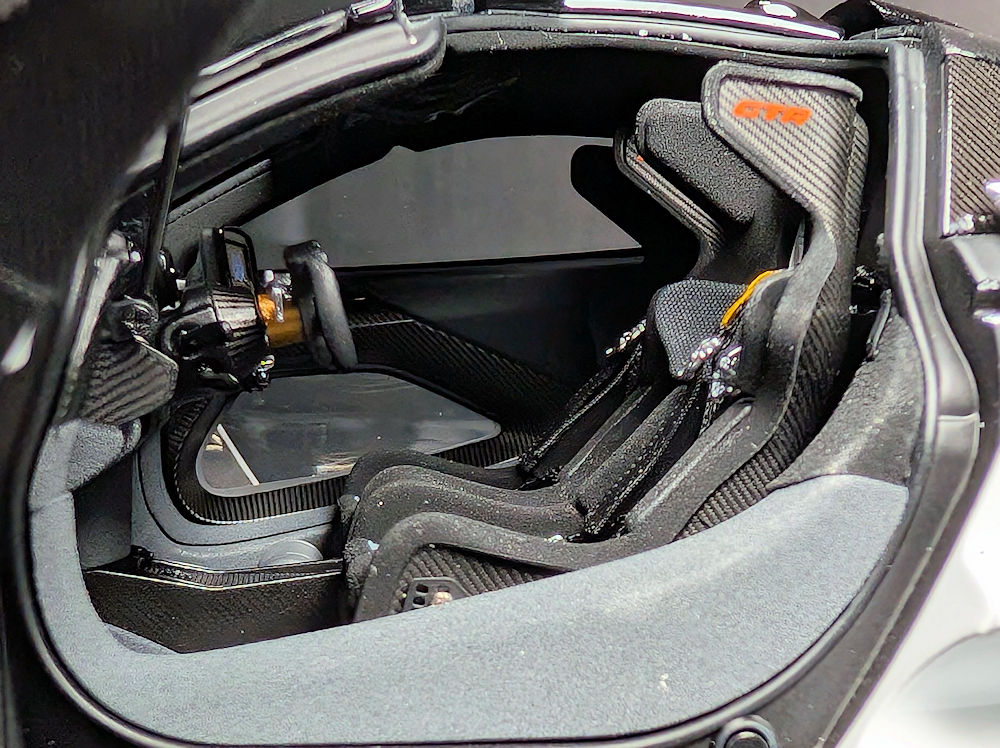
The plaque in the door jamb denoting the car’s production number and place of manufacture appears to have been forgotten. The Senna badging on the passenger side of the dashboard also seems to be missing.
Here’s an interesting fact for you! All Senna GTRs that left the factory are left-hand drive. This detail has been correctly captured on the model.
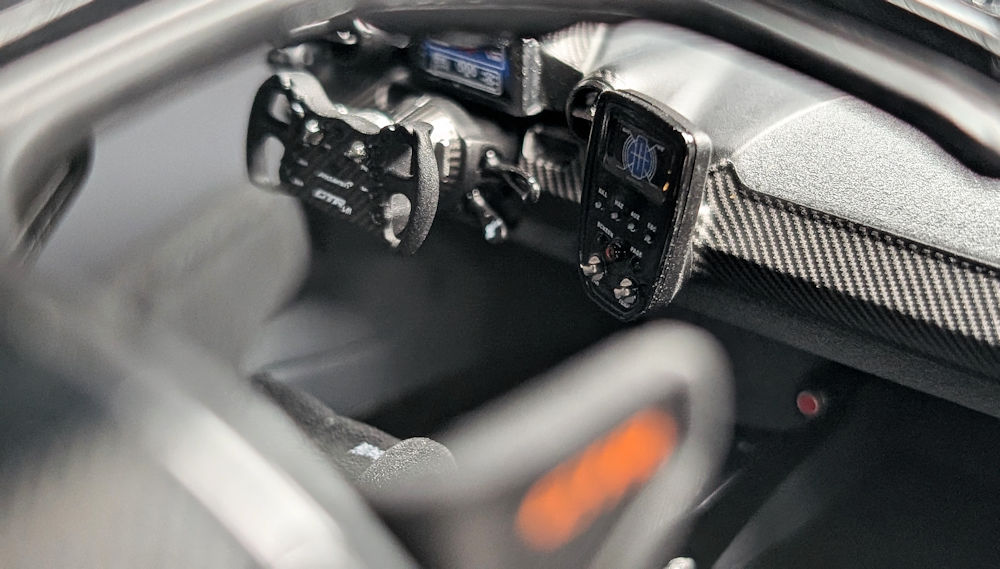
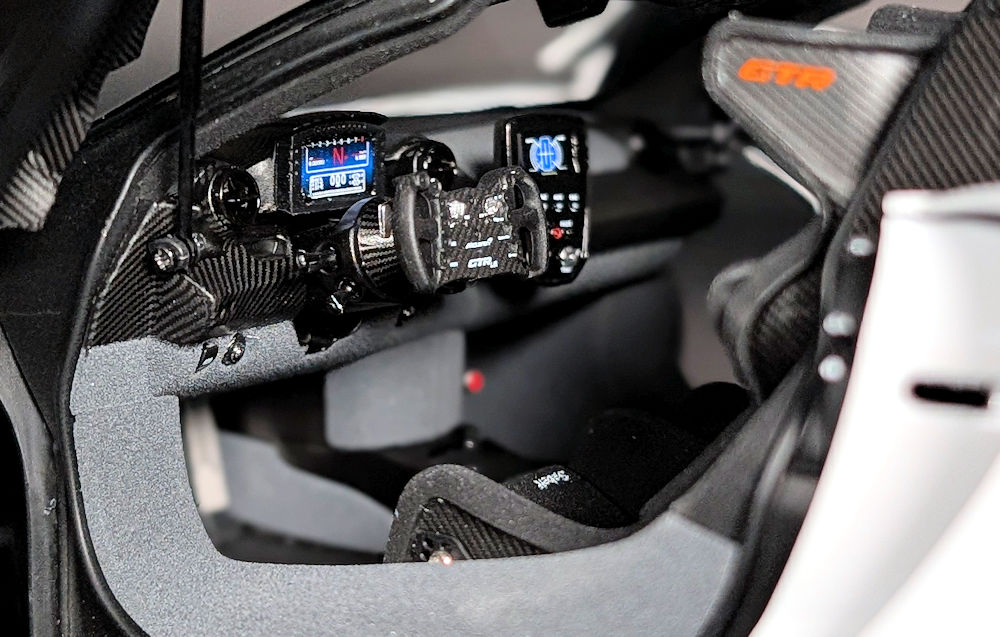
The GT3-inspired steering wheel has been replicated very well. The execution of the centre console is also equally impressive. All buttons, knobs, and switches throughout the cabin are decorated with great attention to detail.
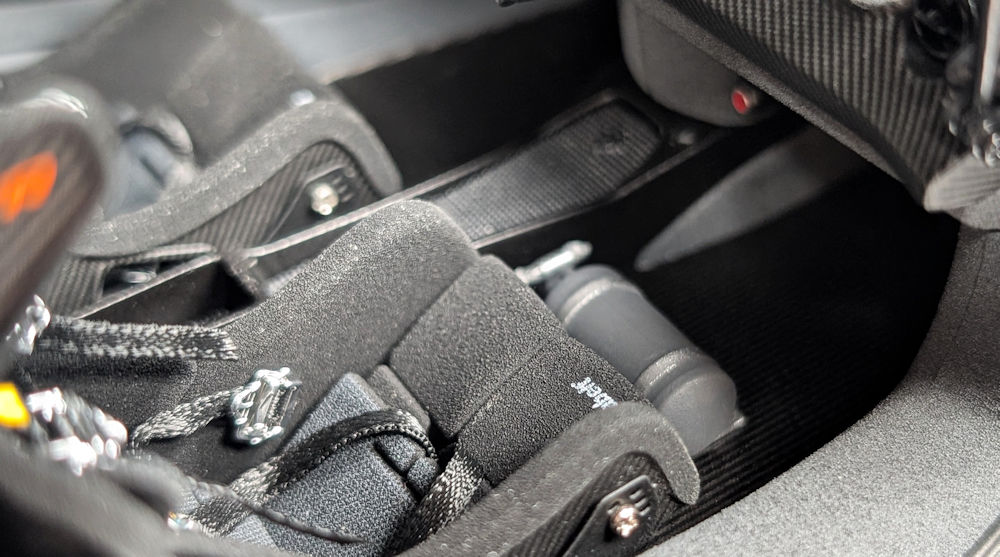
The decals used to showcase the graphics on both the instrument cluster and the infotainment screen look crisp. Other details, such as the button for the onboard fire suppression system and the fire extinguisher located in the passenger-side footwell, are also included.
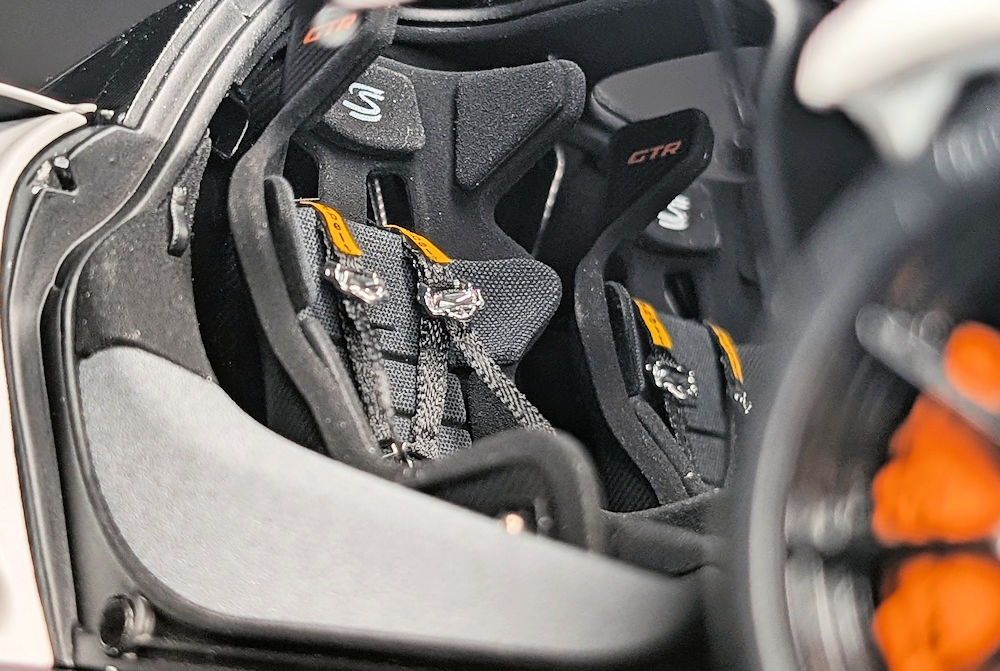
The execution of the Sabelt racing seats is particularly outstanding. As mentioned before, they are completed in an Alcantara-like material with neatly laid out seat padding. As for the seat backs, they are clad in carbon fibre decals. The metal hardware mounted low on the sides of the seats looks impressive as well. The Sabelt five-point harnesses are faithfully recreated using fabric straps and photo-etched buckles.
“GTR” lettering in orange can be seen on the sides of the headrests, and Senna logos appear on the headrests themselves, further enhancing the authenticity.
The struts for the dihedral door opening mechanism are beautifully executed; however, rather than black, it would have been nice to see them finished in orange to match the brake calipers. Overall, the interior is dominated by black and grey tones, which posed a challenge in capturing good shots of the interior. That said, LCD has done an impressive job with the varied surface textures and excellent detailing that prevent the cabin from feeling dull.
ENGINE BAY
With no reference photos of the real engine bay available, it will be difficult to comment on the accuracy of what has been replicated. That said, judging by past releases, LCD has consistently excelled in this area compared to its competitors.
By contrast, the engine bay of AUTOart’s road car isn’t even accessible, and based on the images released of the GTR sample, its engine cover also appears to be sealed.
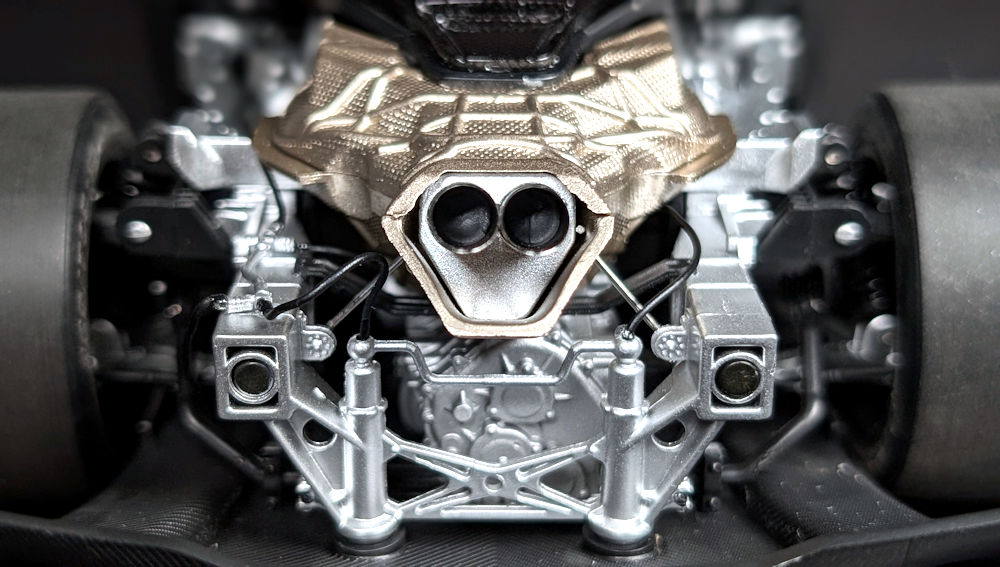
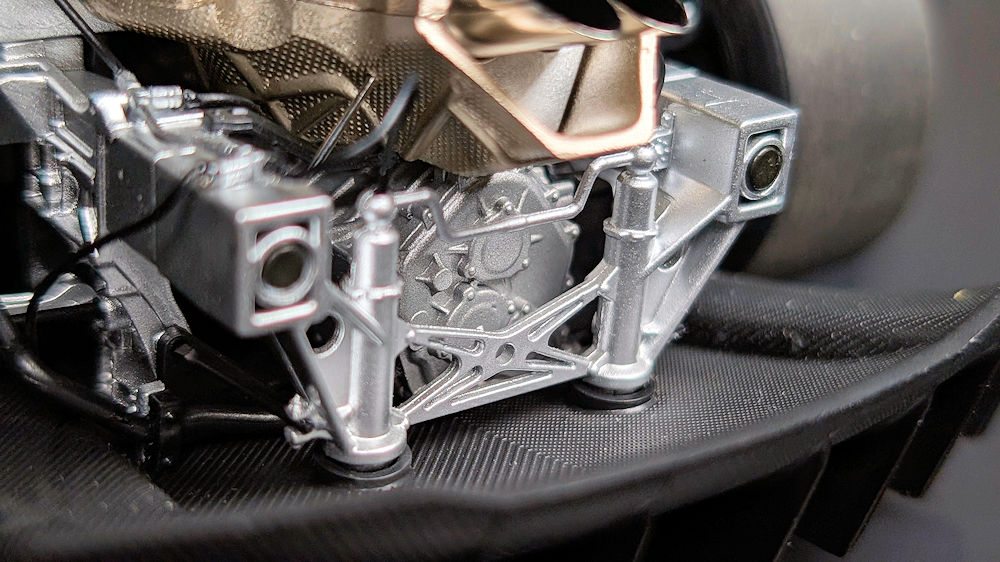
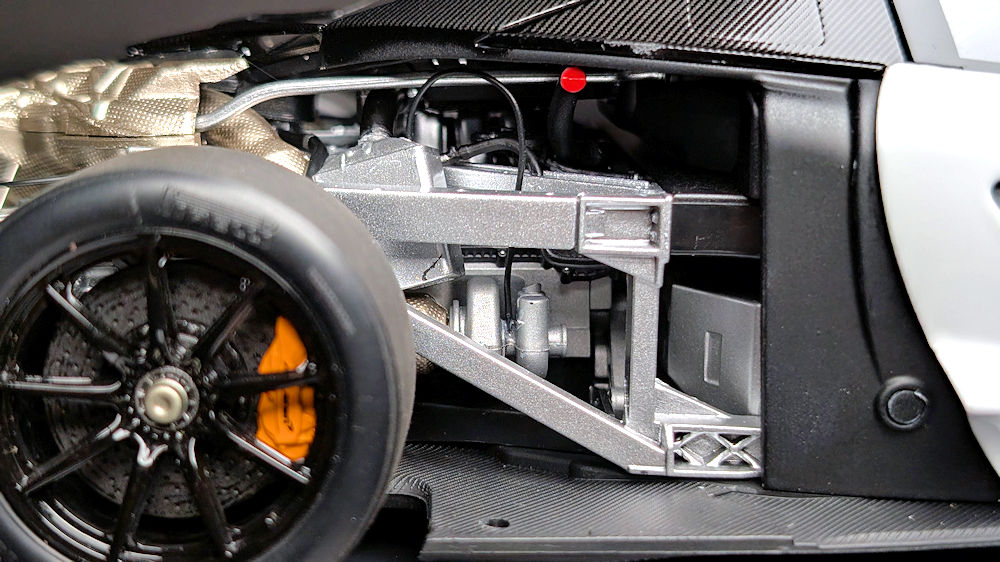
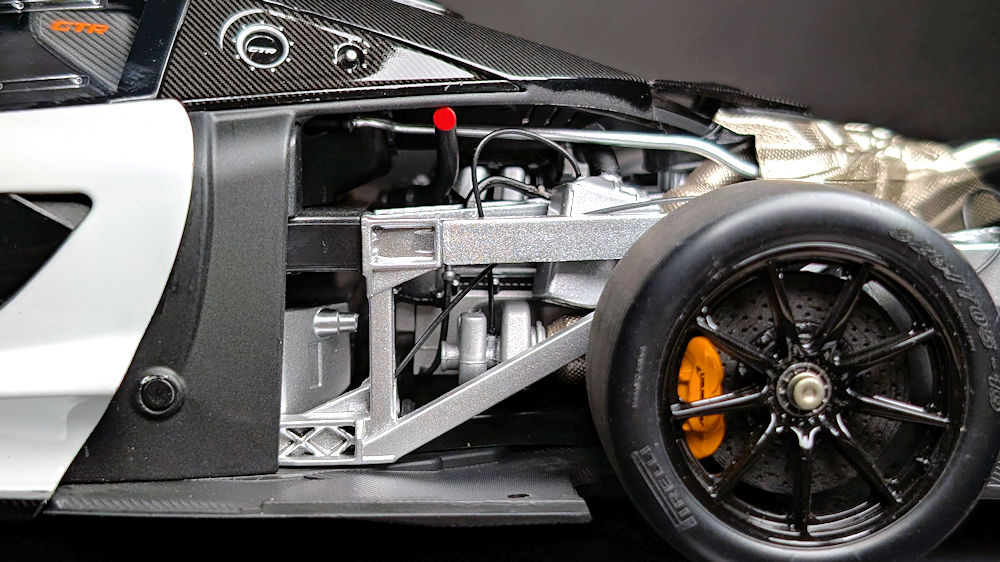
With the rear clamshell taken off, the heat shield is the first thing that caught my eye. Although it partially obstructs the view from above, there is still an impressive amount of detail to absorb. The heat shield, exhaust pipes, subframe, reservoirs, manifolds, automated air-jack system, hoses and cables are meticulously assembled and display an excellent level of craftsmanship. The paint finish and textures of the various components further elevate the realism of the engine bay.
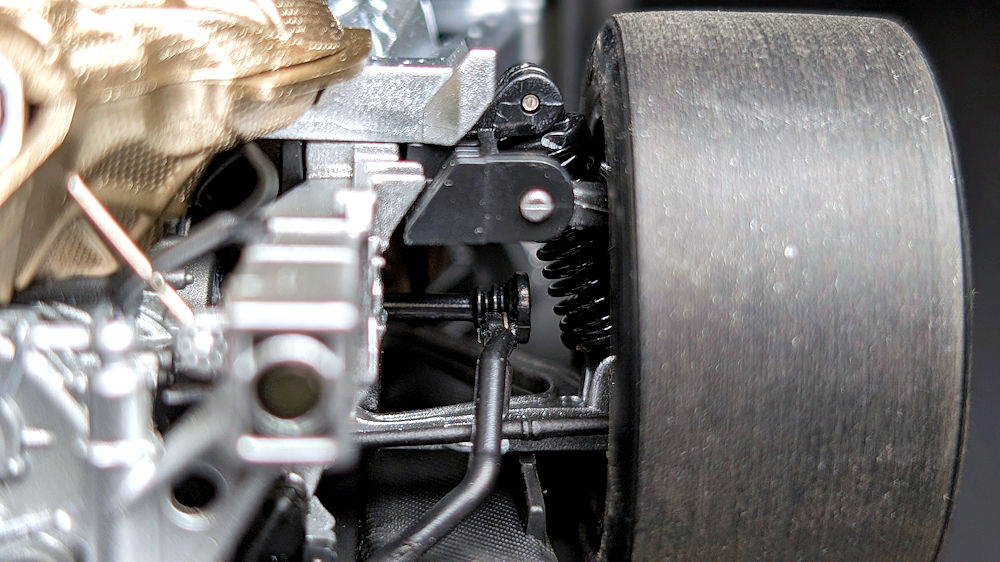
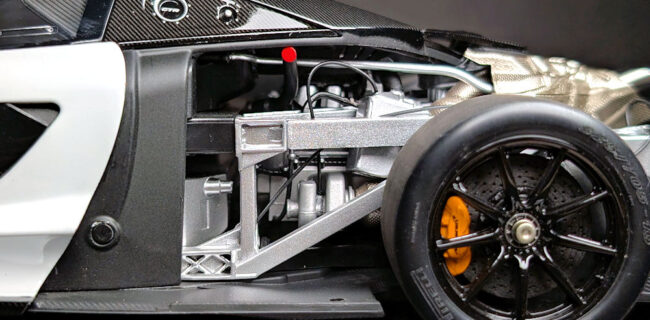
The suspension is, for the most part, replicated very well. However, upon closer inspection, the outer CV joints were found to be abruptly left unfinished, with the shafts not even connected to the wheels.
That said, the wheels do rotate and feature a functional suspension. Additionally, the front wheels are also steerable.
QUALITY CONTROL (QC)
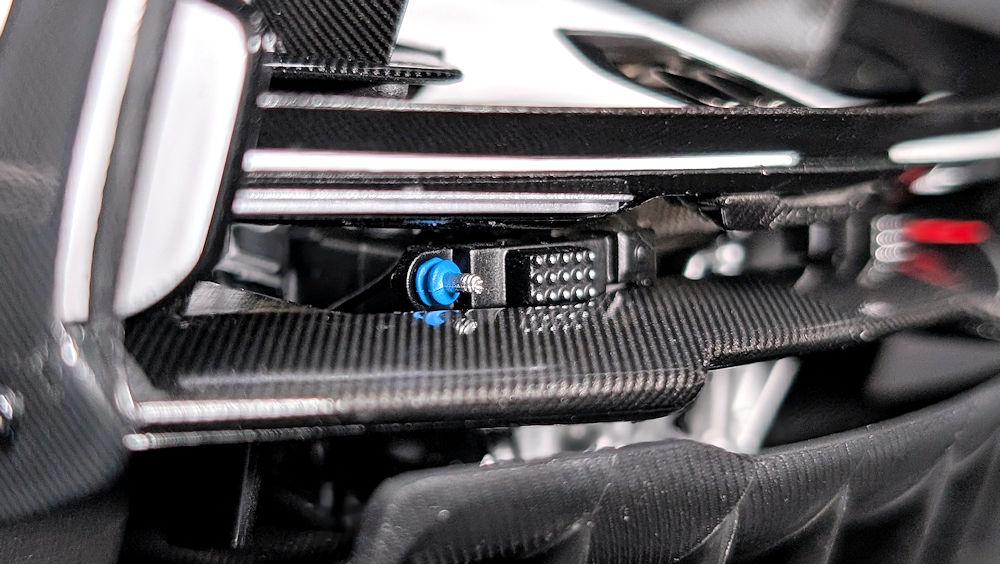
When it comes to QC, brands like LCD and Almost Real have struggled in this department and don’t have the strongest reputation among collectors. From my personal experience, the more complex the model, the more likely it is to have problems. One glaring issue noticed with this particular example, when taking pictures, was that the model didn’t sit level on a flat surface. As mentioned before, the front ride height on the driver’s side is noticeably higher than on the passenger side. Upon removing the front undertray section, the issue was found to be caused due to a broken suspension strut on the passenger side. Thankfully, this should be an easy fix, provided LCD is able to supply the replacement part.
That said, this problem may not be very common, as I haven’t seen any complaints about this online from fellow collectors. Even so, the fact that this example passed QC is laughable.
Aside from this, a few collectors have reported that the canards on the front bumper can come loose during transit, but they can be reattached easily with a small amount of glue.
CONCLUSION
Before I conclude, I’d like to thank my friend Wes for lending me the model for this review.
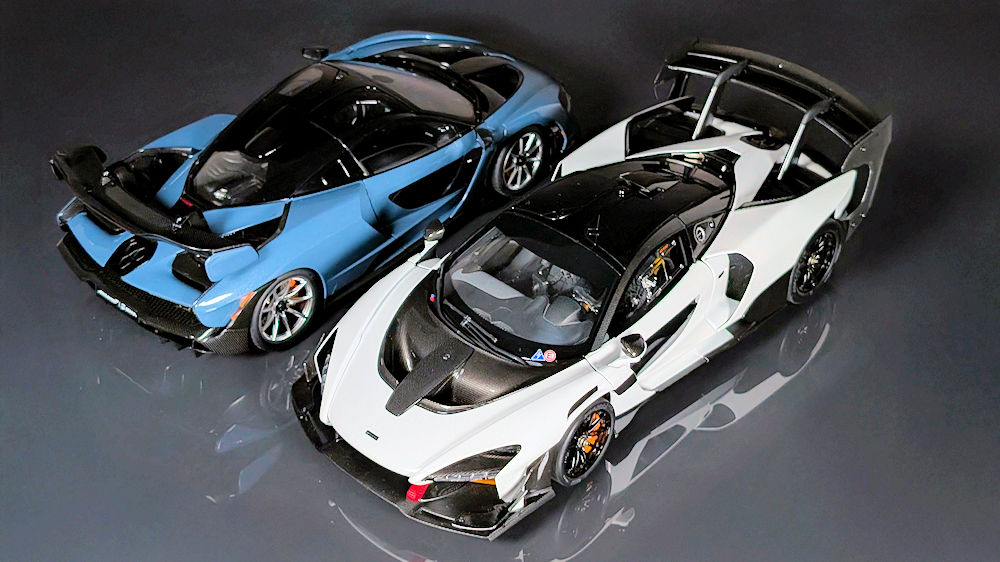
Moving on to my final thoughts: While it’s not a fair comparison, it’s worth noting that the LCD model’s ride height is slightly higher than AUTOart’s Senna. In reality, the GTR sits lower than the road car, even with the latter’s suspension lowered to its minimum setting.
Further, the panel gaps aren’t as tight as those on the composite model. That said, the shut lines don’t look too bad and are acceptable for a diecast model.

If you’re able to find an example without any QC issues and can live with the inherent compromises of a diecast model with functioning suspension, this is a strong offering from LCD. They have delivered just about everything else a collector could ask for – it is diecast, loaded with details, features multiple opening parts, including an accessible engine bay, and to top it off, it’s competitively priced at roughly $250 USD shipped.
The Senna GTR from AUTOart is expected in the second quarter of this year. If I were to guess, it will probably have a slightly sharper-looking exterior with better shut lines, ride height and QC. However, expect it to feature fewer opening parts. I also doubt it’ll be able to match up to LCD’s level of detail.
In today’s world, speed to market can play a big role in this hobby. By releasing the Senna GTR ahead of AUTOart, LCD has not only set a high benchmark but also gained an advantage by drawing the interest of potential buyers away from its competitor.

Scenic, thanks for this excellent and in-depth review. I learned a lot reading through it model-wise and McLaren Senna GTR wise!
LCD has done a great job with this model. And they beat a huge player to market as well, and a second win for LCD is just around the corner with their Lamborghini Revuelto. Well done, LCD!
The model isn’t perfect, as you pointed out. The White exterior doesn’t help hide some of the issues. And as we dicussed White is just boring as an exterior colour for the GTR!
As for AUTOart’s upcoming release, I doubt they will provide additional engineering to access the motor bits. And the level of interior detail provided by LCD is something AUTOart hardly strives for today.
The big miss with the LCD Model Senna GTR is the rear drive shafts, something one would expect on a Bburago release, LOL! What were they thinking!?
On a personal level, I’ll wait for the AUTOart piece to hit shelves before purchase. And I hope LCD has more exterior colour options in the works. As the two presented options, just aren’t doing it for me.
PS – Thanks Wes!
You’re very welcome! Thank you for the kind words. I’m happy to hear that you found the review informative. Yea, white doesn’t cut it for me. I’m sure there will be several more specs in the future. If they make a spec I really like up, I’ll pick one up.
Many thanks, Wes. I am looking forward to my red/ white Marlboro livery version and keep my fingers crossed in terms of QC.
And course thanks to Scenic for the meticulous review that spares me the trouble of a write-up on mine. A photo gallery will then do.
The next I’d love to see MP4-12C from LCD. Full-opening of course
My pleasure guys, happy to lend the model out for the review.
In case anyone is interested, you can replace the broken strut with a few steps:
1. Undo the screws holding the front canards to the lip.
2. Remove the screws holding the front undertray (I think there are 4)
3. Remove the 4 screws holding the wheel/steering assembly.
4. Push out the two pins holding the strut in place
5. Insert the new strut, replace the pins and put the model back together.
Unlike you guys I really love the model in white. It has that factory prototype simplicity like customer racing cars at delivery. There’s a lot going on visually so the white paint doesn’t get in the way.
Thank you Wes, this is great! Your model-building insight and advice are very valuable. It also helped me with this review, so I really appreciate that!
Great